Acorn Woodpecker
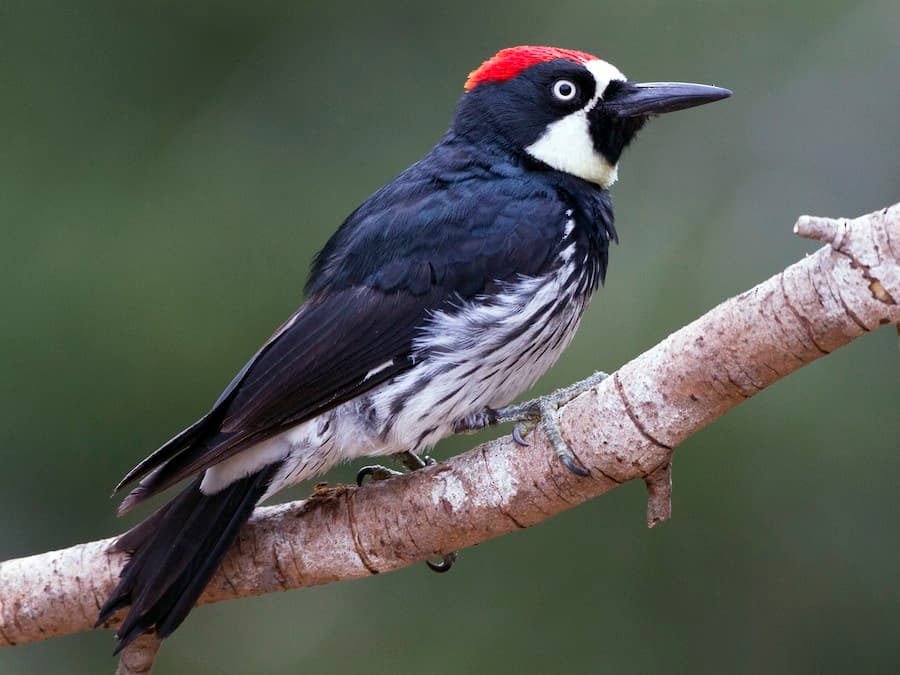
Medium-sized woodpecker with uniq" ue face pattern: "red crown, pale yellowish forehead and throat, and pale eye. Otherwise glossy-black with streaky underparts. In flight, look for blazing white rump and wing patches. Typically fairly common from western North America to Colombia, especially in mixed oak forests and other open woodlands. Social and conspicuous. Occurs in family groups that breed cooperatively. Well-known for stashing large numbers of acorns in telephone poles and tree trunks. Listen for nasal “waka-waka” calls and chatters.
eBird species page
American Crow
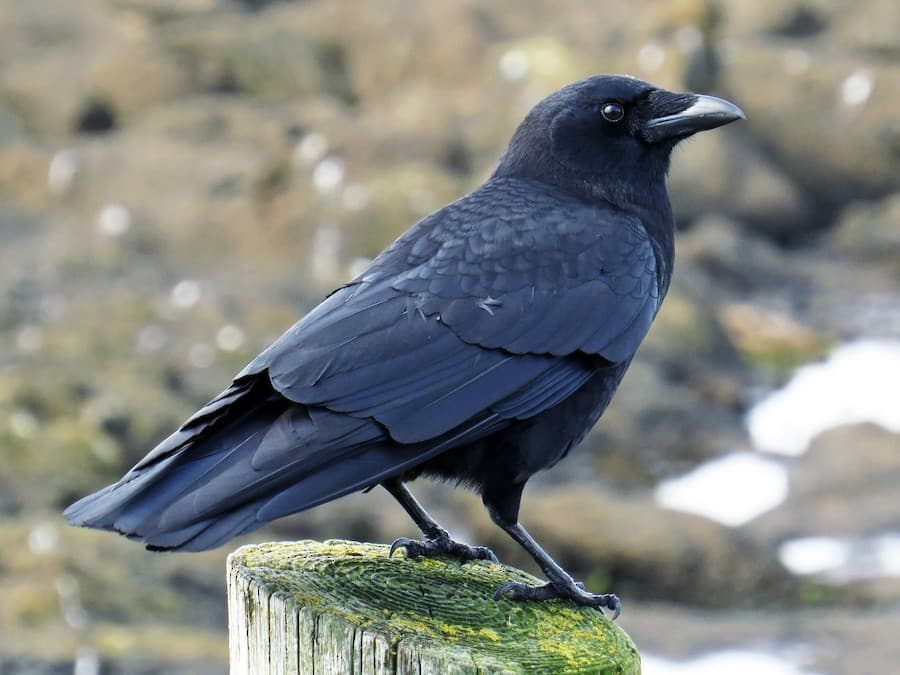
This is the common crow over much" of the U.S. and "Canada. Most easily identified by voice, a familiar “caw,” often repeated. Common in any open habitats, including fields, open woodlands, marshes, and cities, thriving around humans. Very social, usually seen in flocks, sometimes numbering in the hundreds or even thousands. Aggressive, sometimes seen chasing away hawks and owls. Separated from ravens by smaller size, smaller bill, shorter tail, and shorter, broader wings. Compare with Fish Crow, which is extremely similar in appearance, and best separated by voice. Includes the species formerly known as Northwestern Crow.
eBird species page
American Goldfinch
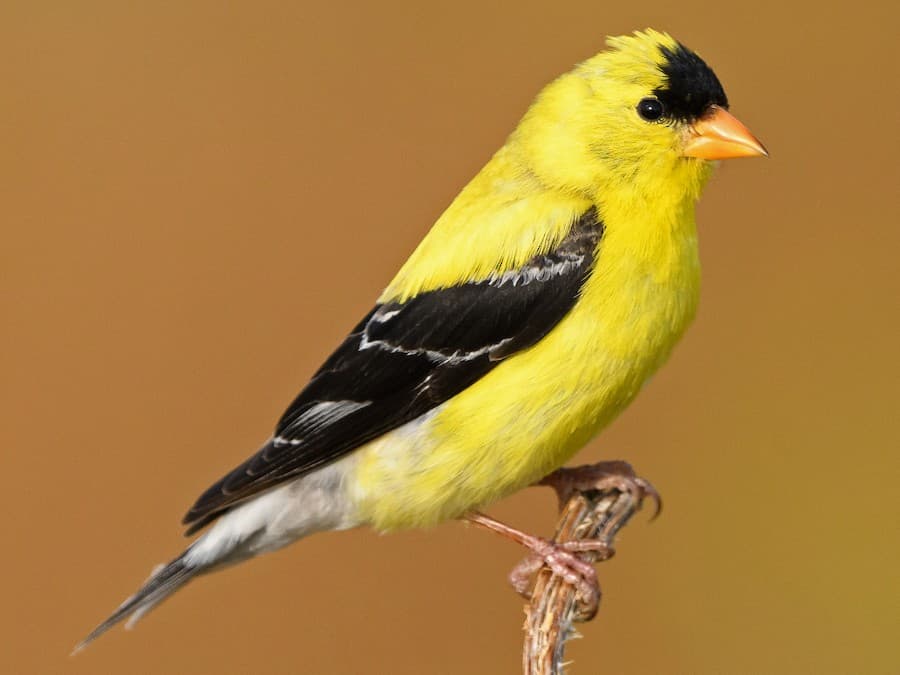
Small finch. Sharply pointed bill" is pin k in summ "er, grayish-brown in winter. Small head, long wings, and short, notched tail. Adult males in spring and summer are bright yellow with black forehead and wings. Females are dull yellow below and olive above with two distinct wingbars. In winter, they are drab, buffy-brown. Active and acrobatic. Sometimes in large numbers at feeders or on ground below. Found in weedy fields, cultivated areas, roadsides, orchards, and backyards.
eBird species page
American Kestrel
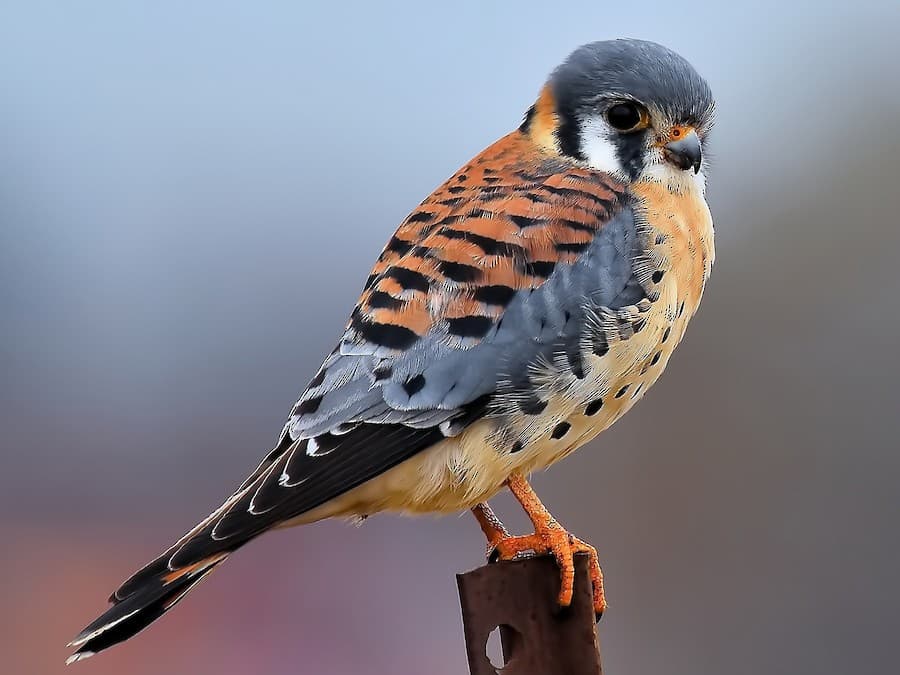
Petite falcon roughly the same si" ze as M ourning D "ove, but with a larger head and wider tail. In flight, note long, narrow wings and square-tipped tail. Often seen perched on telephone wires, along roadsides, in open country with short vegetation and few trees. From a perch or hovering, they usually drop to the ground to snatch small mammals and insects. Nests in cavities. Widespread across the Americas.
eBird species page
American Pipit
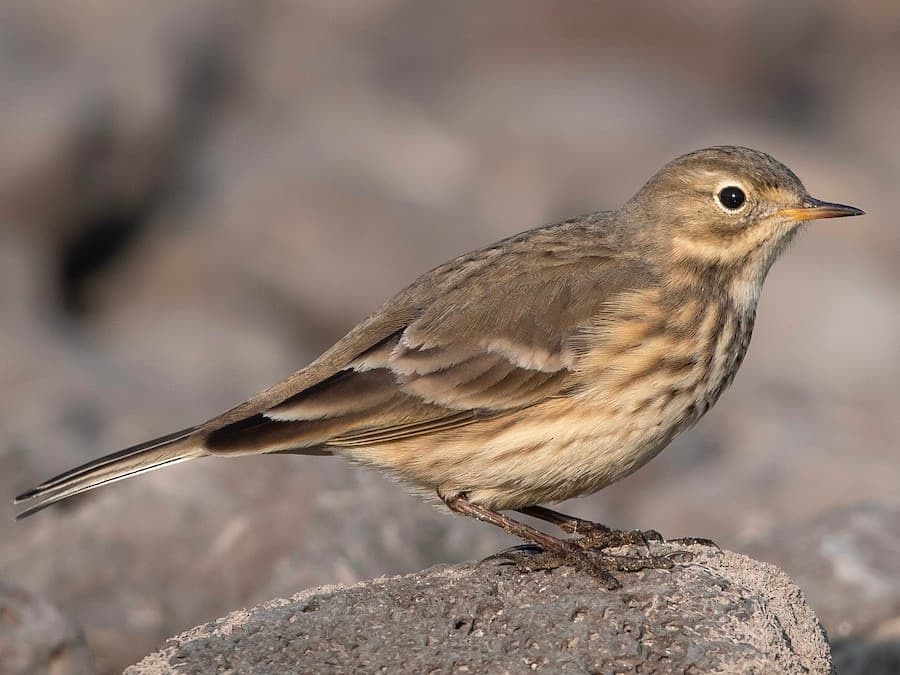
Slender and drab songbird of open" co untr y. Usuall "y grayish above and streaked below, but some lack streaks in breeding season. Distinguished from similar-looking (unrelated) sparrows by thin bill and lanky appearance with long legs. Walks on the ground with jerky motions and frequently bobs tail. Flocks are often heard as they pass overhead or flush from a barren field; listen for sharp, high-pitched call notes and look for flashing white outer tail feathers. Song, given from a perch or in flight, is an often impressively lengthy series of repetitive, high-pitched notes.
eBird species page
American Robin
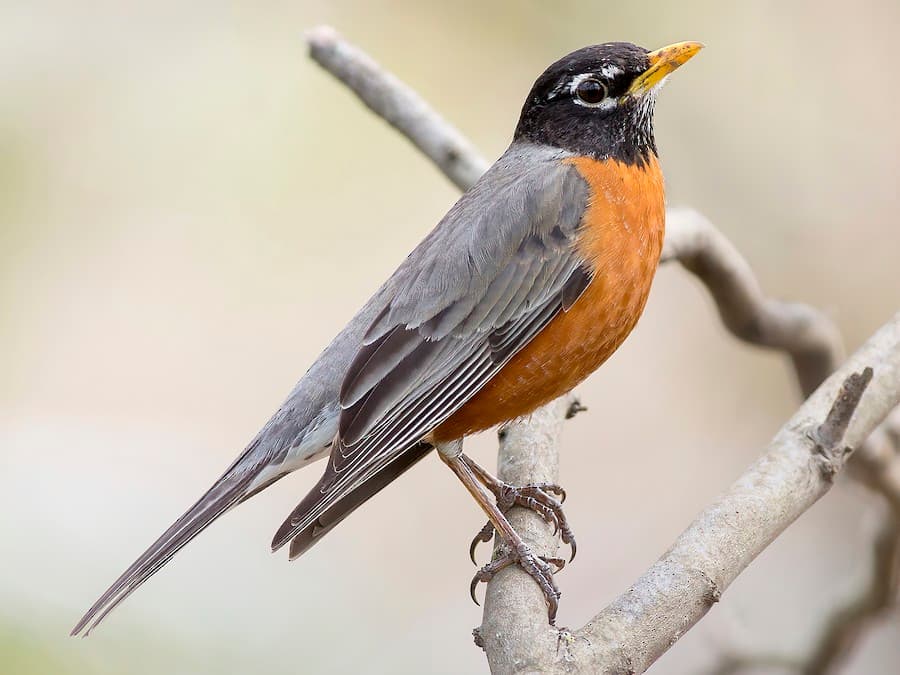
Fairly large songbird with round" bod "y, l" "ong legs," "and longish tail. Gray above with warm orange underparts and blackish head. Hops across lawns and stands erect with its bill often tilted upward. In fall and winter, forms large flocks and gathers in trees to roost or eat berries. Common across North America in gardens, parks, yards, golf courses, fields, pastures, and many other wooded habitats.
eBird species page
Anna's Hummingbird
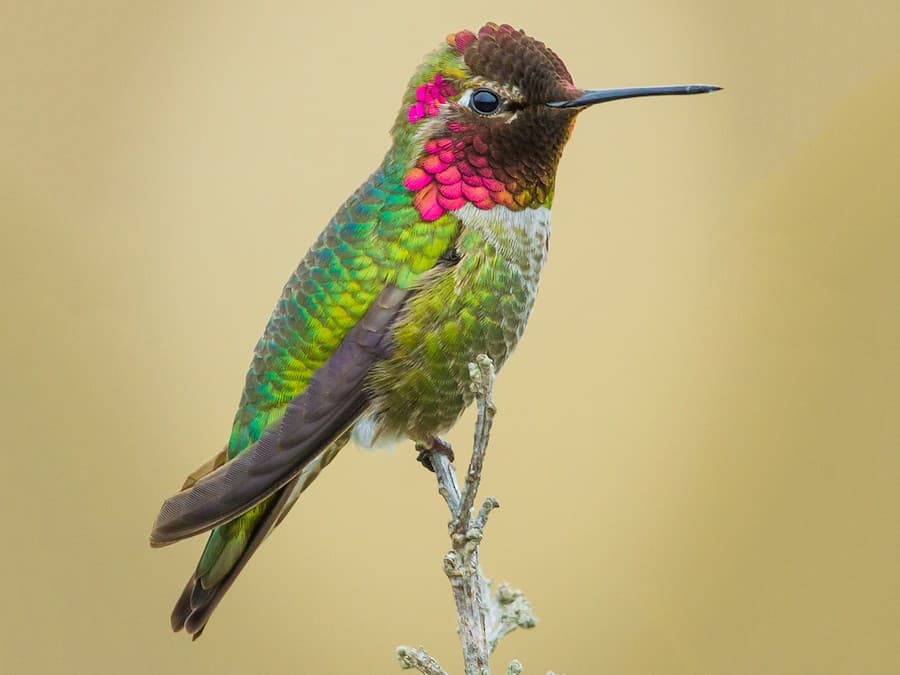
Relatively large-headed and chunk" y. Gray and gree "n overall, lacking buffy or orangey tones. Males have shocking magenta head, which appears dark when not catching the light. Females have dingy grayish underparts and often show a dark patch in the center of the throat. Note relatively short, straight bill compared with Black-chinned or Costa’s Hummingbird. Common year-round in the Pacific states of the U.S., mainly in relatively open or scrubby habitats including desert scrub and chaparral. Frequently seen in suburban yards and gardens, often visiting sugar water feeders. Expanding its range northward into British Columbia, even regular in southeast Alaska. Winters to southern Baja and locally elsewhere in Mexico. Listen for male’s scratchy, metallic song, given when perched.
eBird species page
Ash-Throated Flycatcher
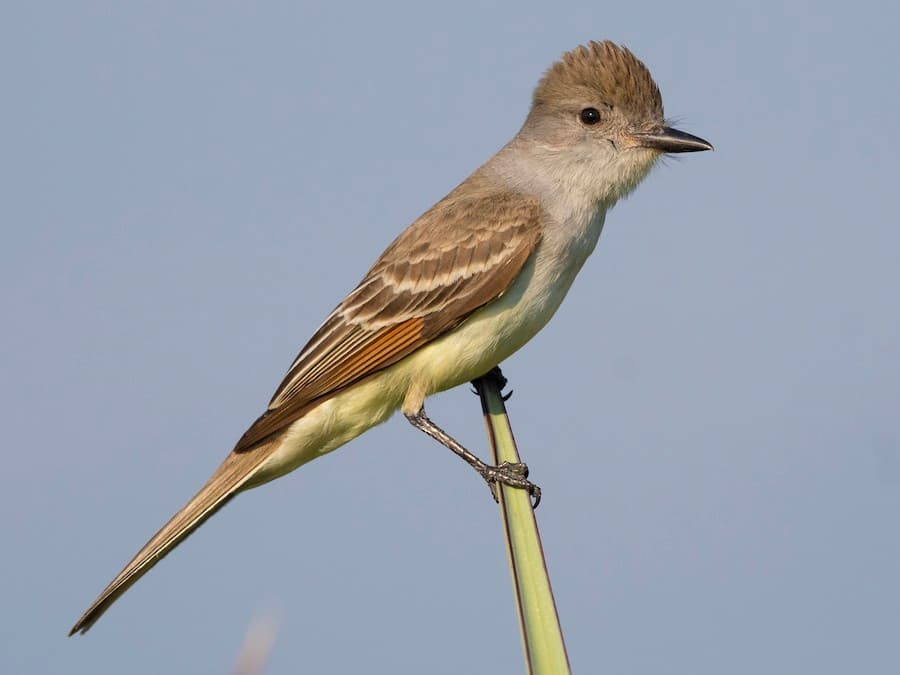
Fairly large flycatcher of arid h" abi tats . Extreme "ly similar to other Myiarchus flycatchers and most easily identified by voice: listen for low, rough calls and flat “pip.” Also note overall pale appearance, especially the whitish throat and very pale yellow belly. Compare with the nearly identical Nutting’s Flycatcher (especially in Mexico) and larger-billed Brown-crested Flycatcher. Fairly common but unobtrusive in brushy woodlands and thickets in dry regions of western U.S. and Mexico, as far south as Honduras.
eBird species page
Barn Owl
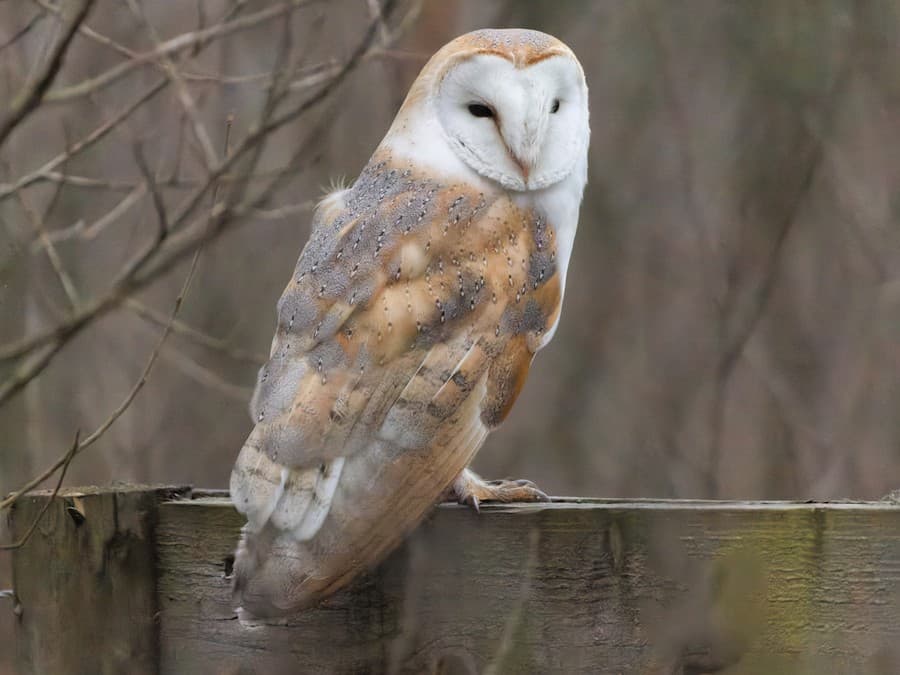
Medium-sized owl with a heart-sha" ped fac ial disc "and deep dark eyes; in parts of its range the only Tyto owl present, but compare with larger and darker-winged African Grass-Owl where overlap occurs. Varies across a wide range, but always note white-and-black speckling on the upperparts, beautiful gray-and-tawny wings, and large round head. Color of the facial disc and underparts varies from pure white to rusty orange. Hunts in open areas by night, foraging with a slow and buoyant flight. Roosts in old buildings, tree hollows, caves, and nest boxes by day. Gives a bone-chilling, rising shriek, as well as shorter rasping calls.
eBird species page
Barn Swallow
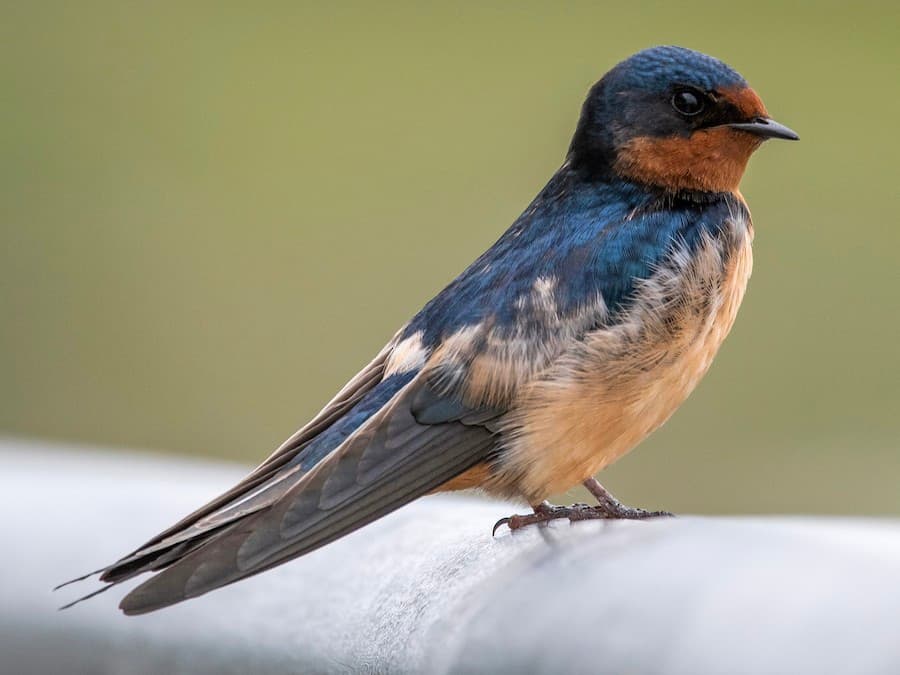
A fairly large, colorful swallow." Us uall y easy to "identify with its long, forked tail and dark rump. Iridescent navy-blue above with a rich orange throat and forehead. Underparts vary across range, from bright buffy-orange to whitish. Occurs in any open habitat, especially large fields and wetlands. Often seen foraging in flocks, sometimes mixed with other species of swallow. Typically nests close to human habitation; builds a muddy cup nest in a barn or under a dock. Listen for dry, scratchy “svit svit” calls. Note head and breast pattern and tail length to help separate from various similar species in Africa, Asia, and Australia (e.g., Welcome Swallow, Angolan Swallow, Pacific Swallow).
eBird species page
Bewick's Wren
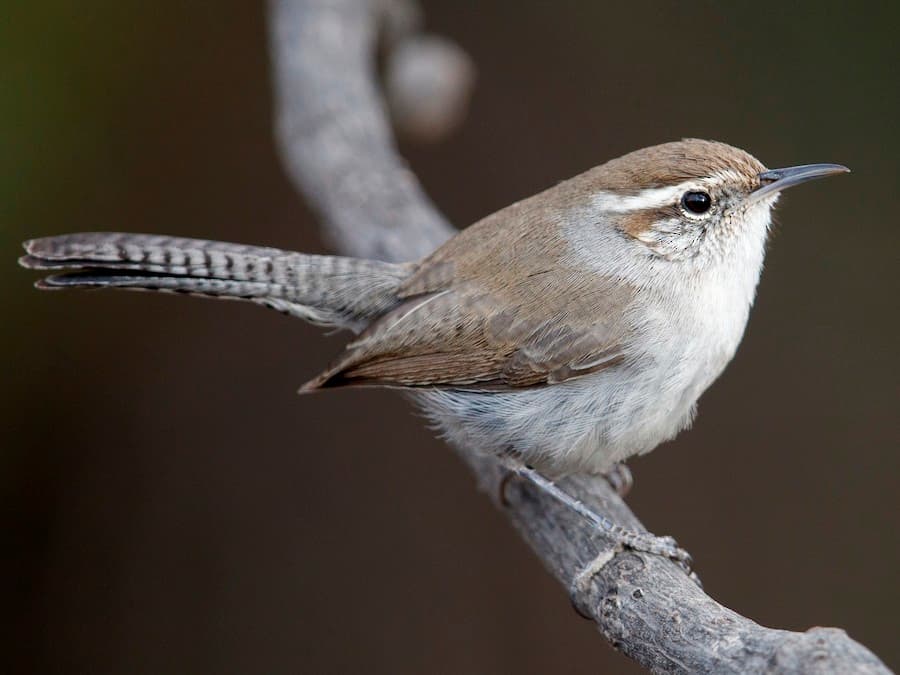
Medium-sized wren, slender and lo" ng- tail ed. Dark "brown above and pale grayish below with a bold white eyebrow. Slender bill is slightly decurved. Superficially similar to Carolina Wren but duller grayish-brown and slightly longer-tailed. Occurs in a variety of scrubby habitats, especially thickets and hedgerows in open woodland. Also at home in gardens, residential areas, and parks. Usually skulking, but sometimes perches conspicuously when singing. Song is variable, but usually includes high-pitched buzzes and musical trills.
eBird species page
Black Phoebe
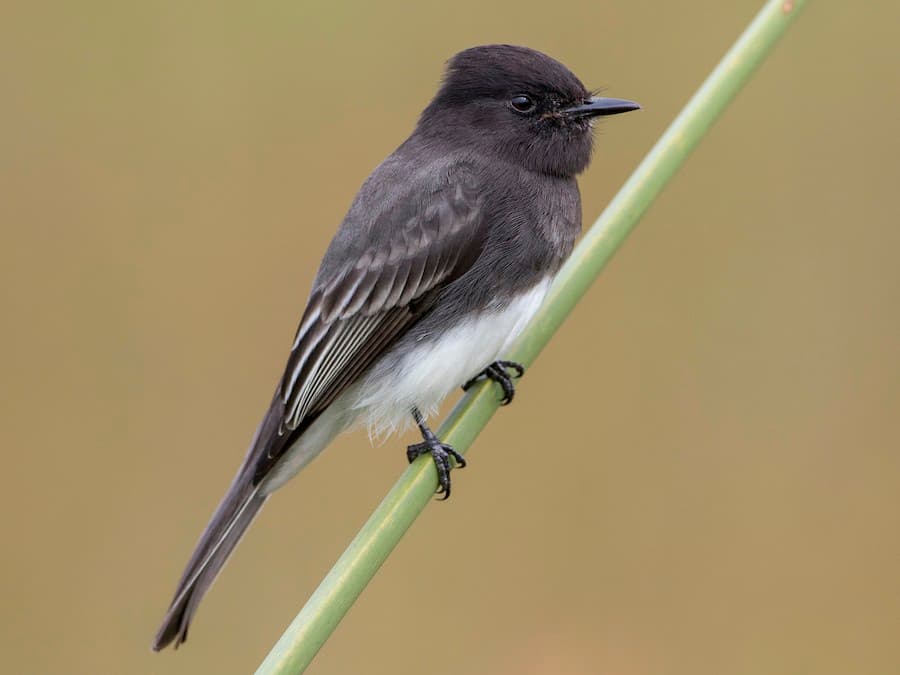
A medium-sized, sooty-black flyca" tch er. Marked ge "ographic variation: most North American birds have dull wings and a clean white belly, while South American birds have bright white edging on wing feathers and much more limited white on the belly. Typically seen singly or in pairs, usually sitting conspicuously on a low perch. Frequently pumps tail up and down. Often near water; especially tied to fast-flowing, rocky streams in South America.
eBird species page
Black-headed Grosbeak
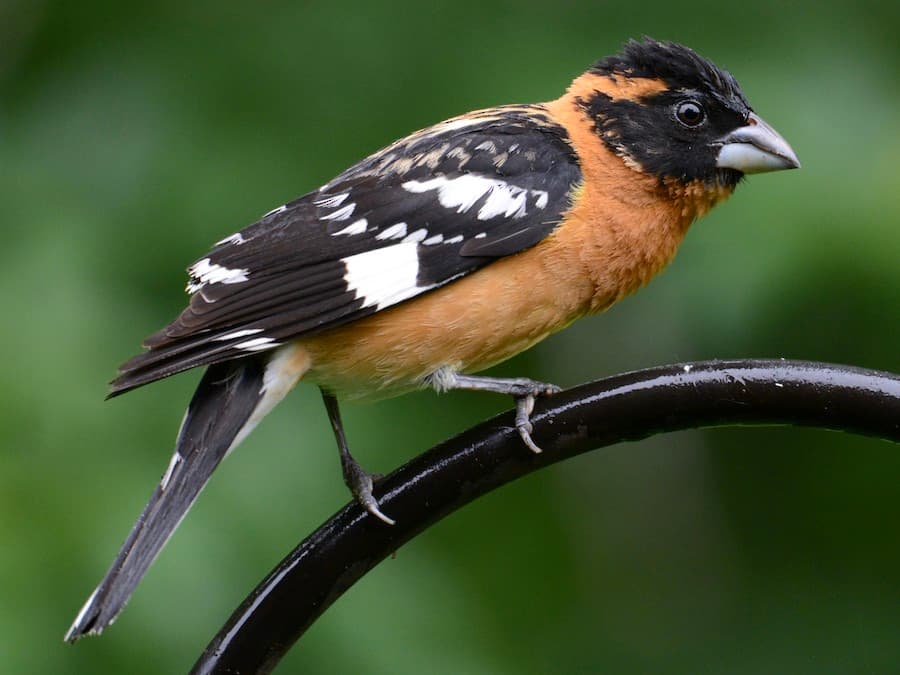
Males are black-and-orange like a" n o riol "e, but st" "ockier with a very thick bill. Nonbreeding males, females, and immatures typically have an orangey wash across breast with fine dark streaking on sides. Underwing coverts are always yellow. Bill usually looks bicolored, darker above and paler below. Fairly common in a variety of woodlands including mountain forests, thickets along desert streams, and backyards. Winters in Mexico. Regularly visits feeders. Listen for sweet robinlike song and squeaky call. Compare females and immatures with extremely similar Rose-breasted Grosbeak, which is usually identifiable by range. Black-headed usually has sparser and finer streaking on the underparts and more orange tones.
eBird species page
Black-throated Blue Warbler
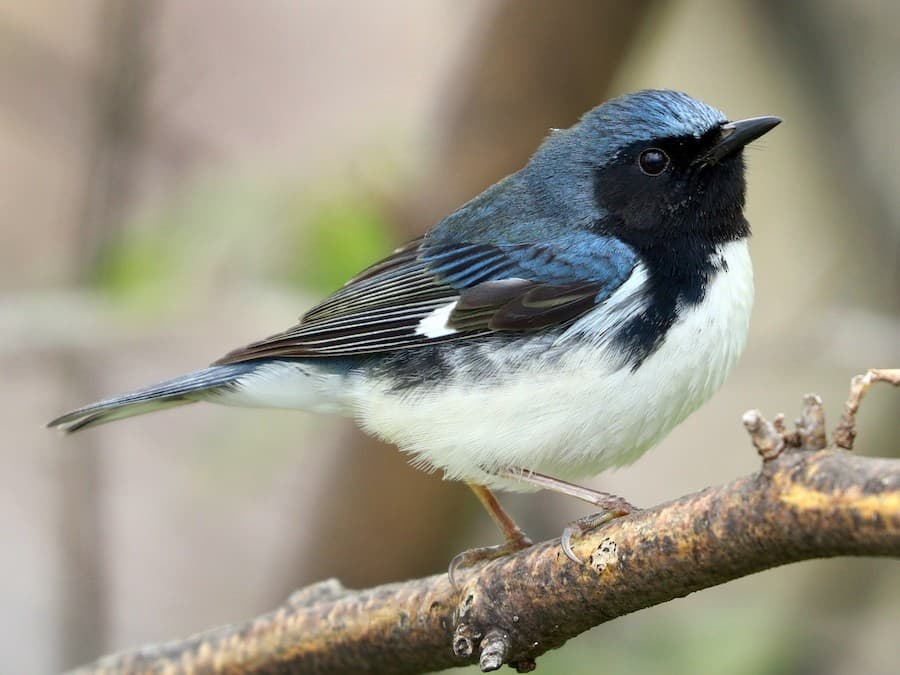
Striking warbler with vastly diff" ere nt m ale and f "emale plumages. Males are unique deep blue above with black face and sides and white belly. Females are plain brownish-olive with dingy buffy underparts and subtle face pattern. Always look for small white patch on the wing, lacking only on the dullest immature females. Breeds in the understory of mixed forests, favoring hills with dense vegetation. Found in nearly any wooded or shrubby habitat during migration. Winters primarily in the Caribbean. Listen for lazy buzzy song, usually a series of notes with a final long buzz.
eBird species page
Brown Creeper
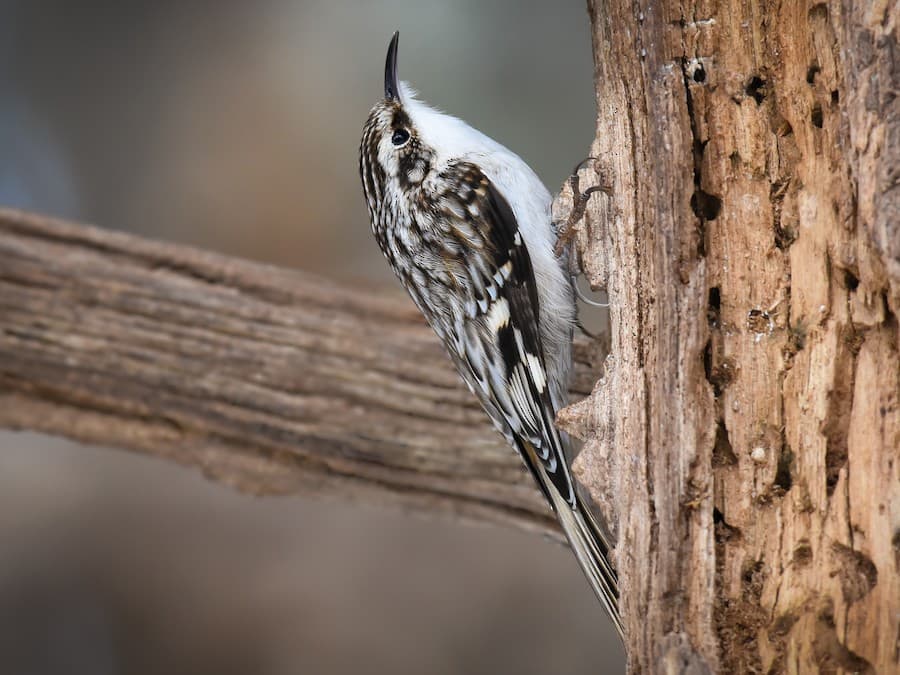
Tiny, cryptic woodland songbird," uni que in North "America. White below and streaked brown-and-buff above; blends into tree bark very easily. Also note narrow, decurved bill and long tail. In flight, shows a bold buffy wing stripe. When foraging, often starts near the base of a tree trunk, hitches upward in short, jerky motions until it nears the top, then flies to the base of a nearby tree to begin the process again. Found in mature woodland, especially with conifers. Often joins mixed flocks with other songbirds, especially in winter. Listen for high, thin calls and sweet cascading song.
eBird species page
Brown-headed Cowbird
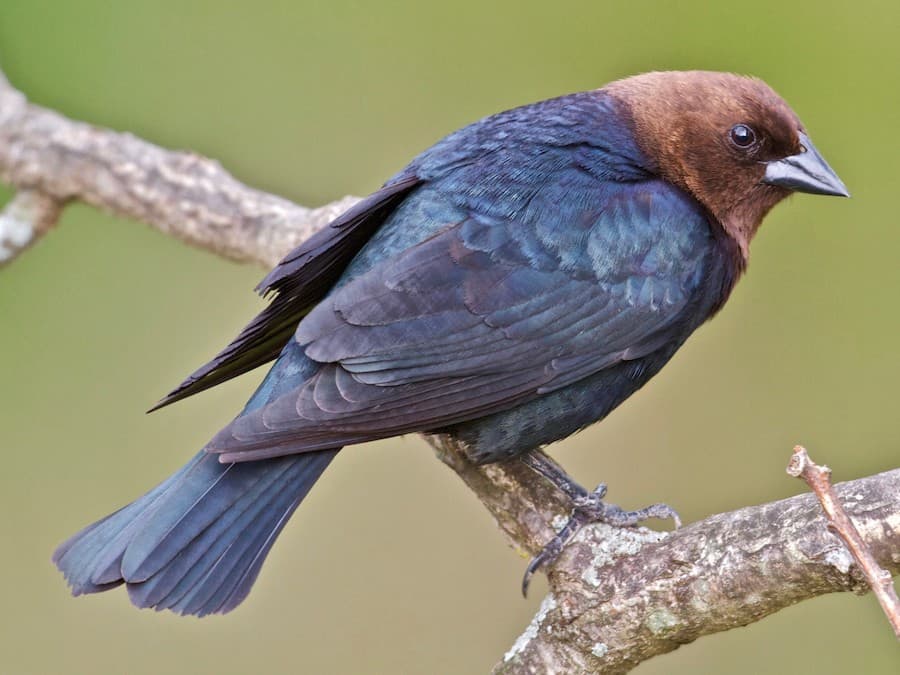
Stout bill. Short tail and stocky" bo dy. Males are "glossy black with chocolate brown head. Females are gray-brown overall, without bold streaks, but slightly paler throat. Juveniles streaked brown. Found in open woods, farmland, and stockyards. Forages by walking on the ground. Often in flocks with other blackbirds in winter. Visits feeders. Well known as a brood parasite, laying their eggs in the nests of other bird species.
eBird species page
Bushtit
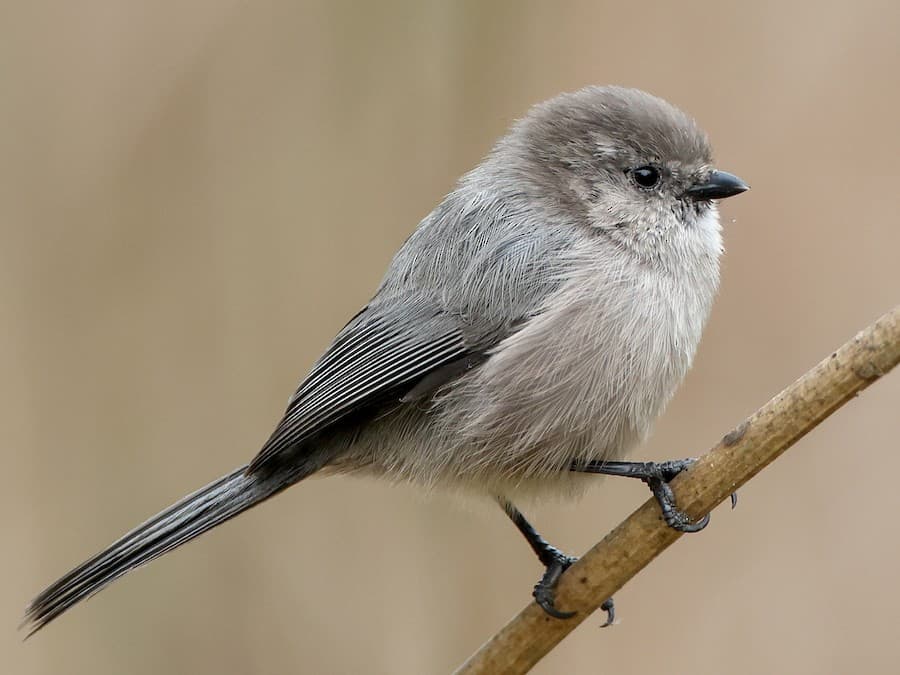
A tiny, long-tailed, fluffy gray" bal l of a bird. "Distinctly drab brownish-gray with a stubby dark bill. Multiple populations differ slightly: eye color ranges from dark to pale, and some have black cheeks. Constantly in motion; active, twittering flocks move quickly through bushes and trees. Listen for their high-pitched, scratchy calls. Found in brushy woodlands and pine-oak forests in western North America, south to Guatemala.
eBird species page
Cactus Wren
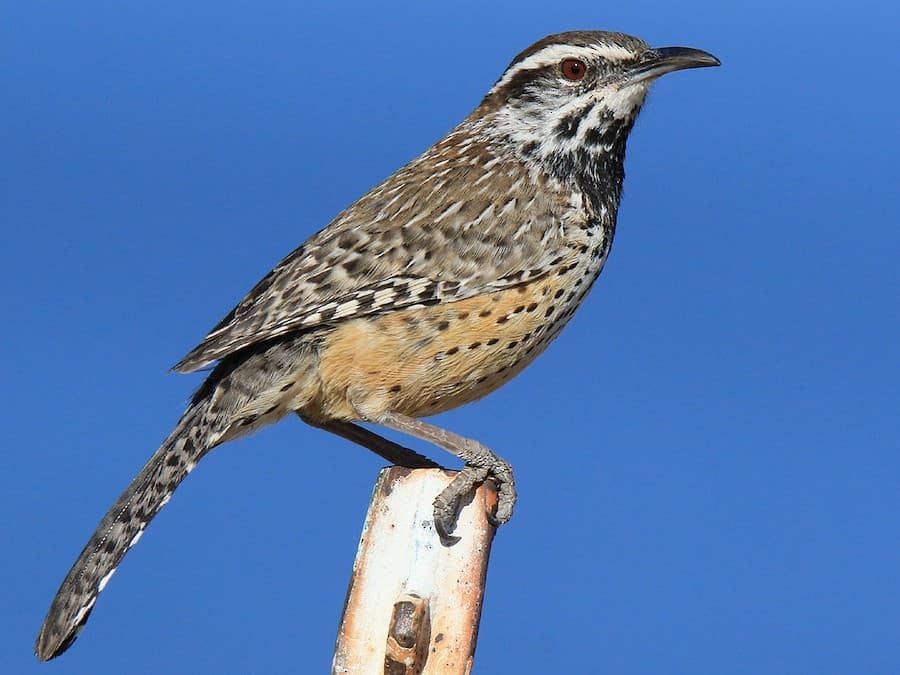
Large, boldly-marked wren of the" sou thwe stern U.S ". and Mexico. Look especially for bold white eyebrow and dense spots on underparts. Aptly named, this wren rarely strays from desert scrub with plentiful cactus, usually with areas of open ground. Typically seen in pairs or family groups, which are often quite vocal and conspicuous. Builds a large oval stick nest. Listen for harsh, grating calls.
eBird species page
California Scrub-Jay
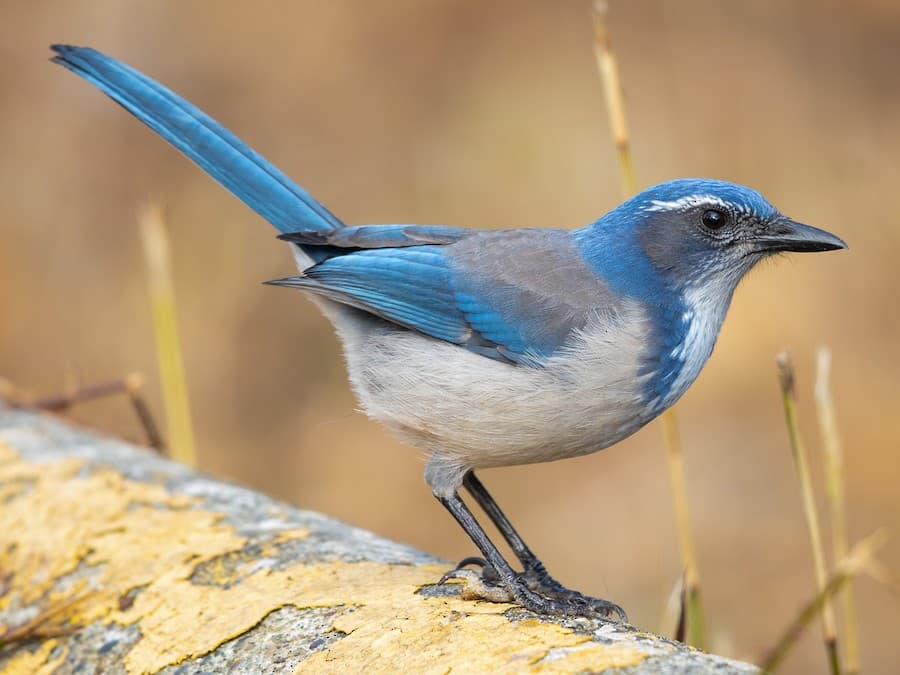
Attractive jay of oak woodlands," dry scr "ublands," "and mixed pine-oak. Royal blue above with gray-brown back and light grayish underparts. Flight style is often distinctive, a series of quick wingbeats followed by a stiff glide. Typically in small groups. Listen for scratchy, nasal calls. Regularly visits backyards and feeders. Most similar to Woodhouse’s Scrub-Jay (and once considered the same species), but usually separable by range. Also note California Scrub-Jay is darker and more richly colored, with a more obvious blue breast band.
eBird species page
California Towhee
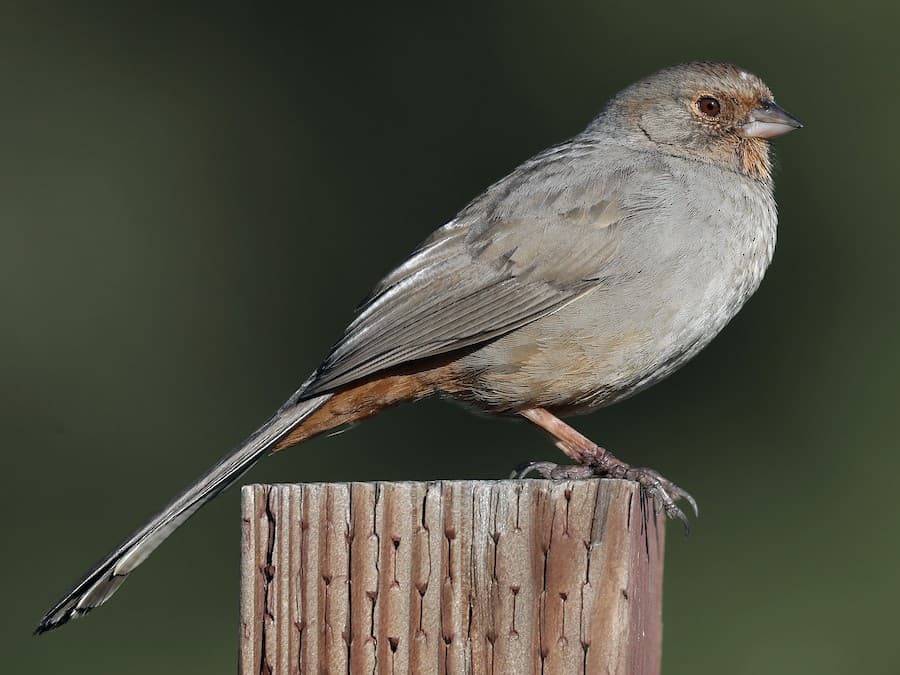
Large, stocky, long-tailed sparro" w. Unif orm matte "brown, with rich cinnamon tones on face and orange undertail coverts. Also note very limited streaking on upper breast with no central spot. Occurs in chaparral and other tangled shrubby, dry habitats. At home in neighborhoods and gardens in lowland California towns. Forages primarily for seeds by running and hopping on the ground. Visits feeders. Essentially no range overlap with the very similar Canyon Towhee; also note California has plain brown crown and obvious rusty tones on face.
eBird species page
Canada Goose
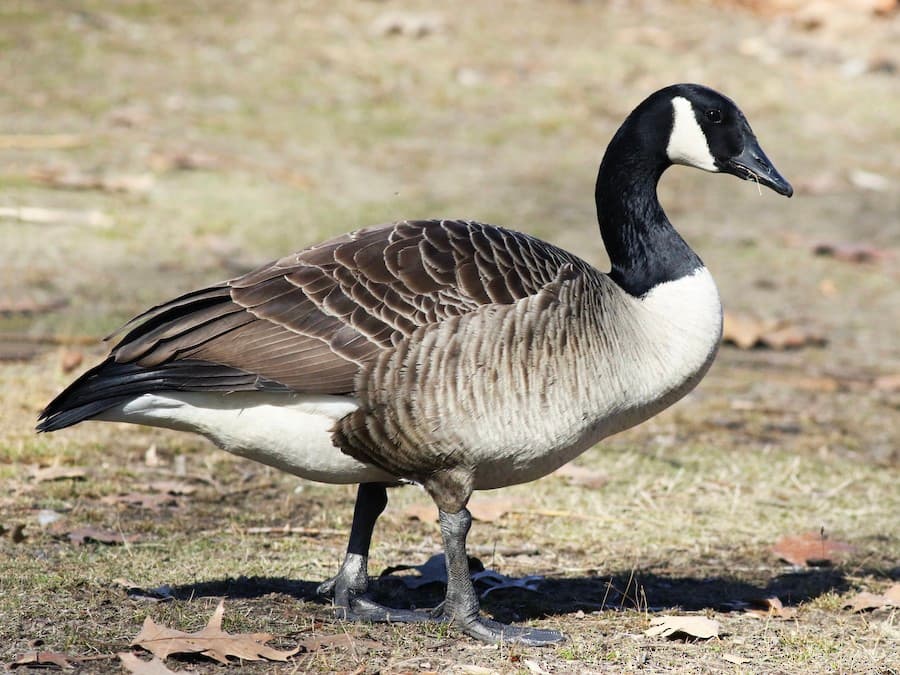
A large brown goose with a black" nec k an d white c "hinstrap. Overall size, bill size, and brown coloration variable across subspecies. Occurs in any open or wetland habitat, from city parks and golf courses to pristine marshes and Arctic tundra. Typically in flocks or family groups. Often seen in mixed flocks with Cackling Goose, especially in central and western North America. Canada Goose is almost always larger, longer-necked, and longer-billed than Cackling, although beware there is some overlap between the smallest Canada and largest Cackling. Abundant and widespread throughout the U.S. and Canada; rare in Mexico. Introduced and widely established in Europe. Listen for loud honking calls, especially as flocks migrate overhead in the classic V formation.
eBird species page
Caspian Tern
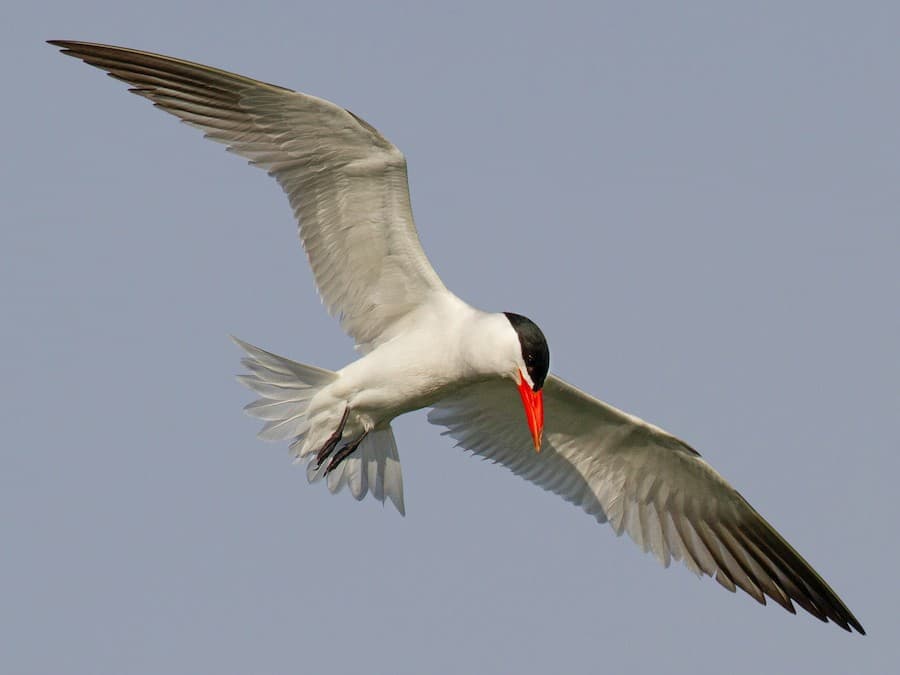
Largest tern in the world; widesp" rea d bu t typical "ly uncommon. Thick, bright-red bill is distinctive; most have small dark marking near the tip. Note solid black cap in summer which turns to black streaks in winter. Juveniles have V-shaped markings on the upperparts. Feeds by cruising over lakes, rivers, estuaries, and reservoirs looking for fish, then plunging to catch them. Smooth wingbeats, more gull-like than choppy flight of small-bodied terns. Very vocal, giving loud raucous screams. Compare especially with Royal Tern, which is slightly smaller and more slender, and has a thinner, more orangey bill.
eBird species page
Cedar Waxwing
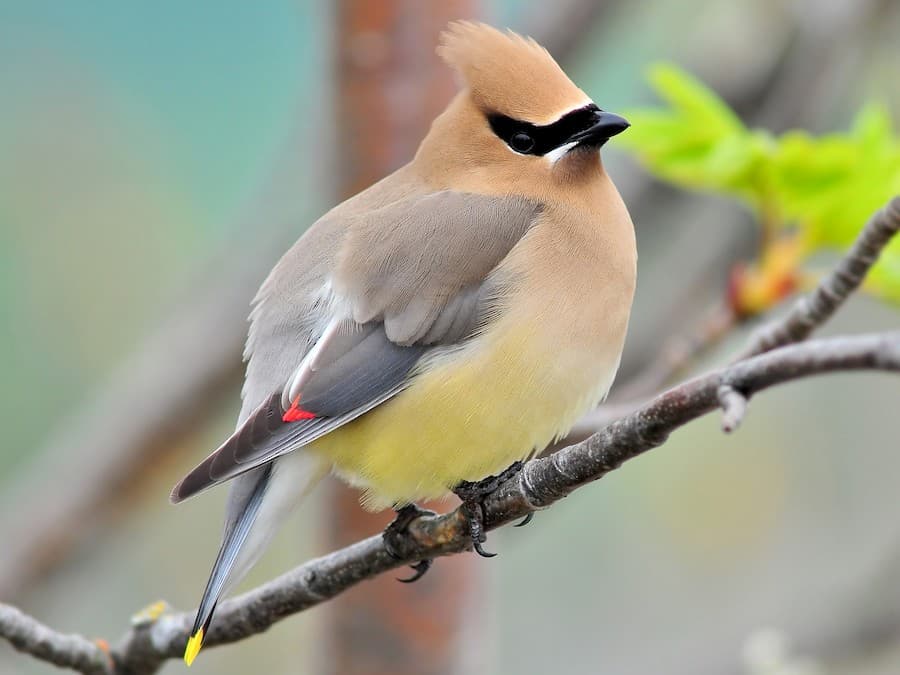
Plump, smooth-plumaged bird with" dis tinc tive thin ", high-pitched call. Adults have a sleek crest, black mask, pale yellow wash on the belly, and yellow-tipped tail. Juveniles are drabber than adults, with coarse streaking on the breast and a reduced mask. Widespread and fairly common in open woodlands, orchards, and shrubby areas throughout most of North America. Winter range is variable and somewhat dependent on fruit crops; sometimes ventures as far south as Panama. Often gathers in large flocks, especially around fruiting trees. Compare with Bohemian Waxwing in the northern part of range; Cedar is smaller, browner, and has a white (not rufous) undertail.
eBird species page
Chestnut-backed Chickadee
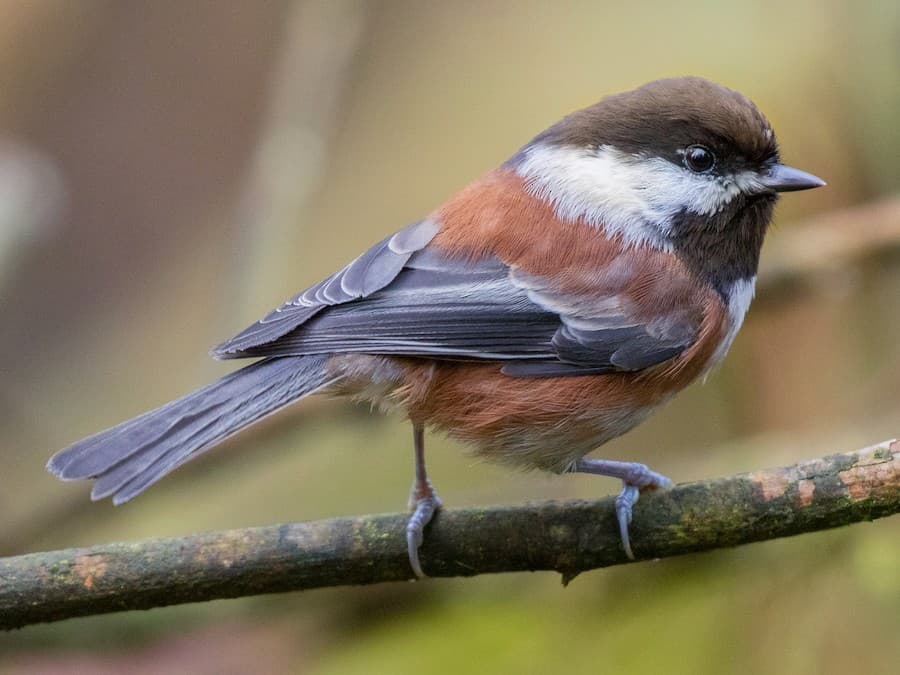
Rather dark, richly-colored chick" ade e of the Paci "fic Northwest. Small, big-headed, and tiny-billed, much like other chickadees, but reddish-brown back and brownish sides are unique. Prefers humid forests, often with dense conifers and oaks; also sometimes in shrubs in suburban areas. Often in flocks, sometimes mixed with other small songbirds. Visits feeders.
eBird species page
Common Raven
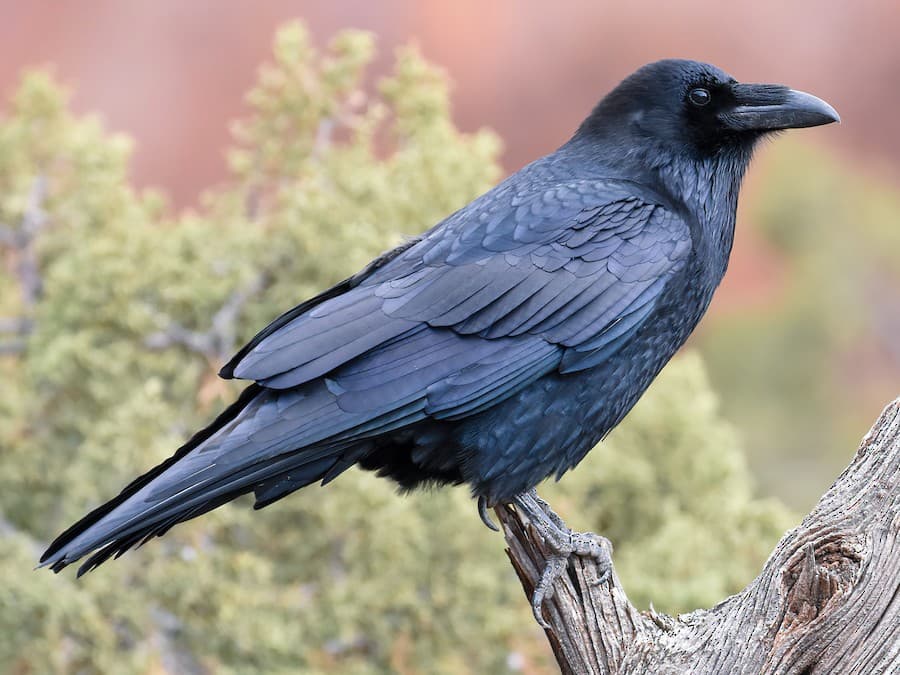
Large, glossy-black bird with a w" edg e-sh aped tail ". Larger than a crow with a longer, thicker bill. Distinctive shape in flight, with rather long, swept-back wings and long tail. Note smoother, steadier wingbeats compared with faster, choppier wingbeats of crows. Extensive range throughout the Northern Hemisphere. Found in a wide variety of habitats, including desert, coniferous forest, coastlines, sagebrush, tundra, and grasslands. Often solitary or in pairs, but can gather in small groups. Typical call is a loud, guttural croak, but makes an astonishing variety of other strange noises. Compare with Chihuahuan Raven in the southwestern U.S. and Mexico, and with various large, all-dark crows and ravens in Europe and Asia.
eBird species page
Dark-eyed Junco
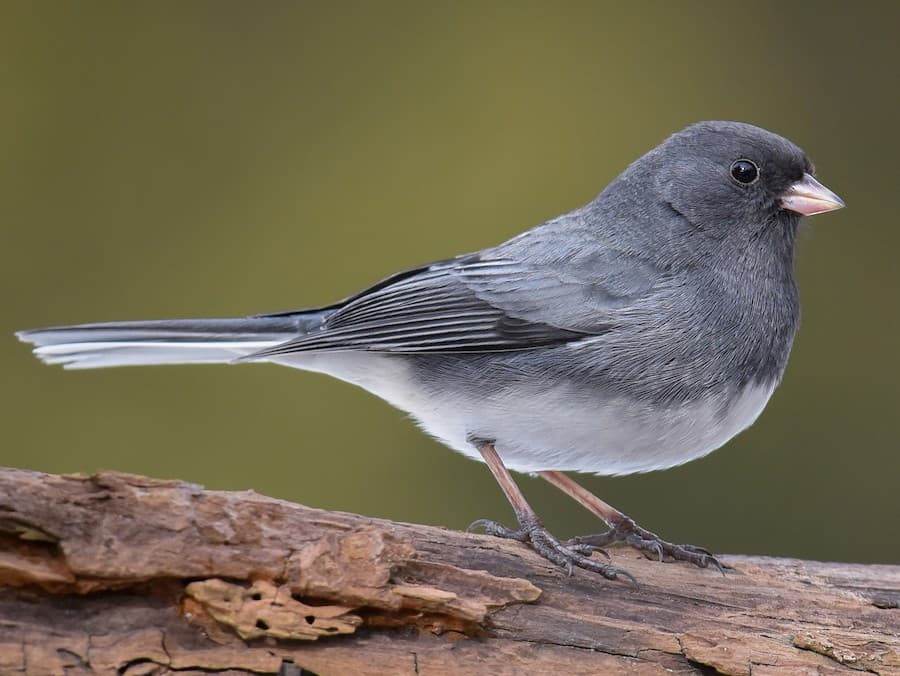
Unique sparrow with incredible va" ria tion between "populations. Generally patterned with gray, white, and shades of tan. All have pinkish bills and white outer tail feathers. Juveniles are streaky. Breeds in a variety of forested habitats, especially with conifers. Found in any wooded habitat in the winter, often in flocks. Usually forages on the ground for seeds, but also fond of brushy thickets or weedy fields. Visits feeders. Subspecies include: Slate-colored (widespread), Oregon (West), Pink-sided (Rockies), Gray-headed (Rockies and southwest U.S. to Mexico), Red-backed (central Arizona and New Mexico), and White-winged (breeds in Black Hills, winters mainly Colorado).
eBird species page
Downy Woodpecker
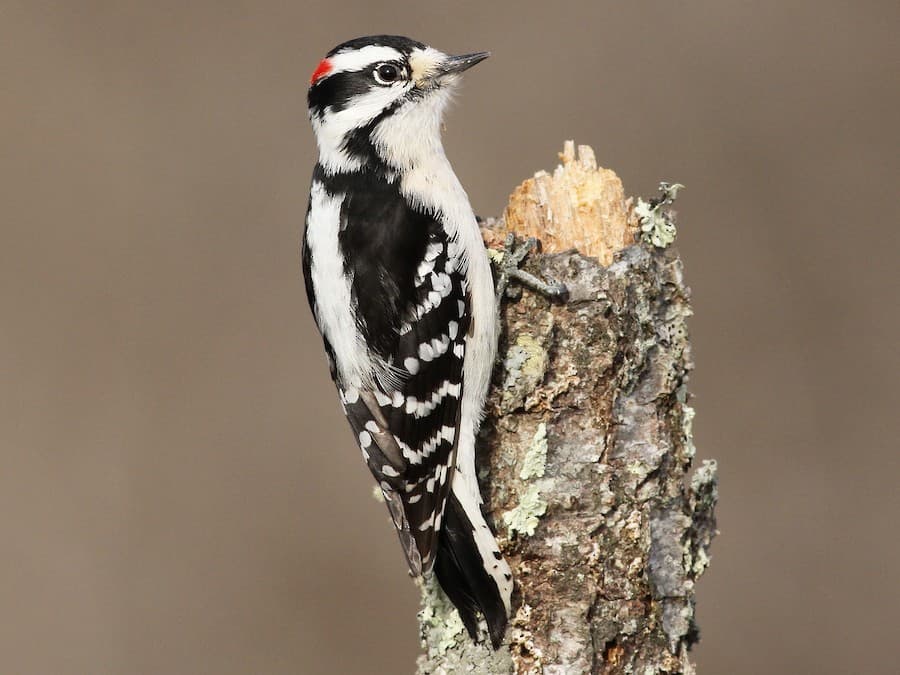
Tiny woodpecker, common and wides" pre ad a cross muc "h of North America. Black-and-white plumage is nearly identical to the larger Hairy Woodpecker. Focus on the bill: Downy has a very short bill, much shorter than the length of the head. Also note the small black markings on the white outer tail feathers. Pacific population has smaller white spots on the wing and a grayer body than Eastern birds. Occurs in any wooded habitat, though western birds are more restricted to riparian areas. Often forages on smaller branches than Hairy Woodpecker. Familiar visitor to backyard feeders, especially fond of suet. Calls include a soft “pik!” and descending rattle, weaker than Hairy Woodpecker.
eBird species page
European Starling
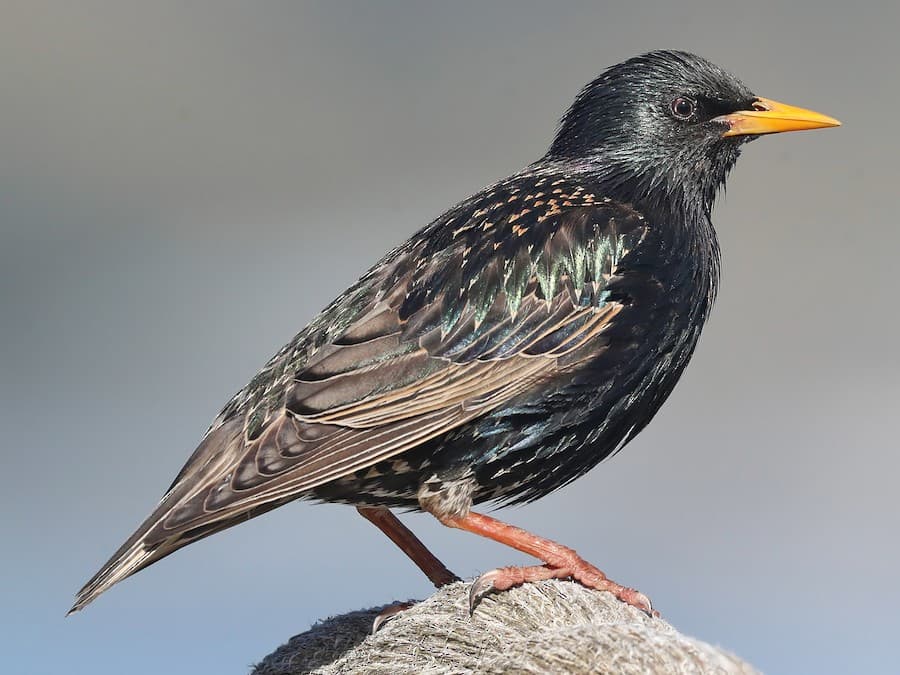
Stocky and dark overall with shor" t t ail and trian "gular wings. A close look reveals beautiful plumage: in breeding season, look for purple and green iridescence and a yellow bill. In winter, shows extensive white and buffy spots over the entire body. Juveniles are plain grayish-brown; note bill shape. Native to Eurasia; introduced extensively across the globe. Often abundant, gathering in large flocks in open agricultural areas and towns and cities. Makes a variety of squeaky vocalizations, and often mimics other species. Visits feeders, where it is often aggressive towards other birds.
eBird species page
Golden-crowned Sparrow
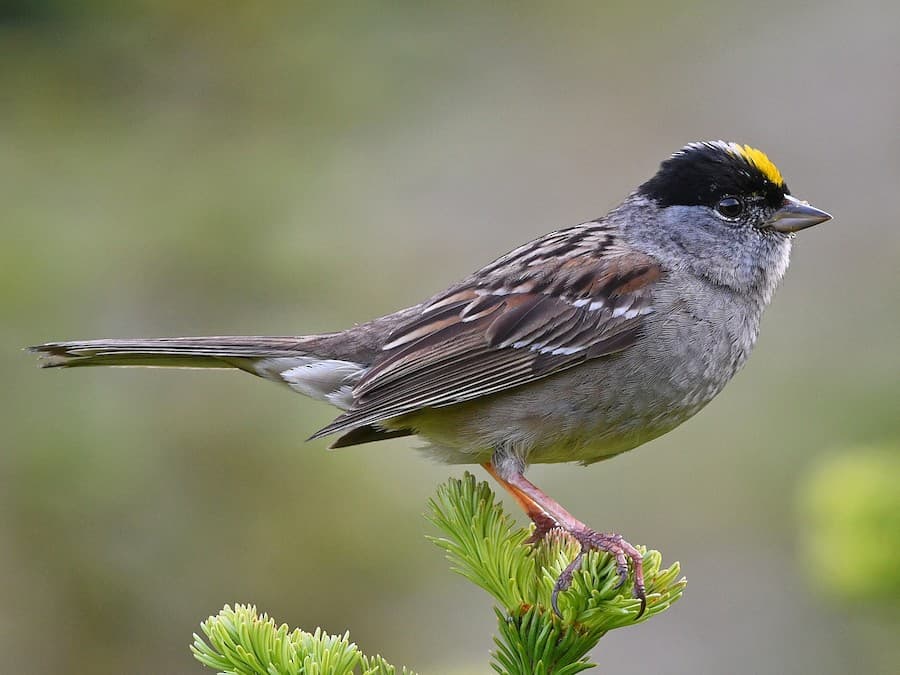
Large, long-tailed sparrow. Look" for bla ck stripe "s bordering yellow crown, especially obvious on breeding adults. Immatures are browner but still show yellow in the center of the crown. Often looks scruffy and not as crisp as White-crowned Sparrow. Breeds in low, shrubby areas of tundra or at edges of boreal forest. Frequents forest edges, backyards, and scrubby areas in winter and migration. Often in flocks with White-crowned Sparrow. Forages on the ground and in low vegetation for seeds and insects. Visits feeders.
eBird species page
Great Blue Heron
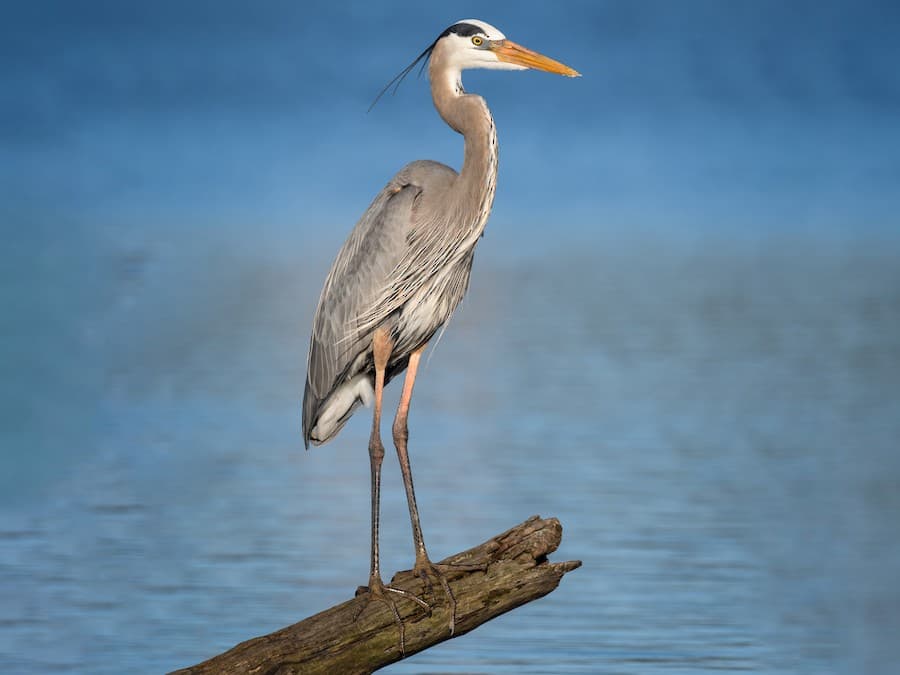
Huge gray heron, no other similar" sp ecie s in rang "e. Note large yellow-orange bill, short black plumes on head, and black and chestnut pattern on shoulder. Immatures are more brownish than adults, and have a dark crown. Fairly common and widespread throughout North America; wintering range extends to northern South America. Occurs in almost any wetland habitat, from small ponds to marshes to saltwater bays. Usually seen singly but can gather in numbers where food is plentiful. White form, sometimes considered a separate species (“Great White Heron”), is found in southern Florida and the Caribbean. It is most similar to Great Egret but has a larger bill.
eBird species page
Great Horned Owl
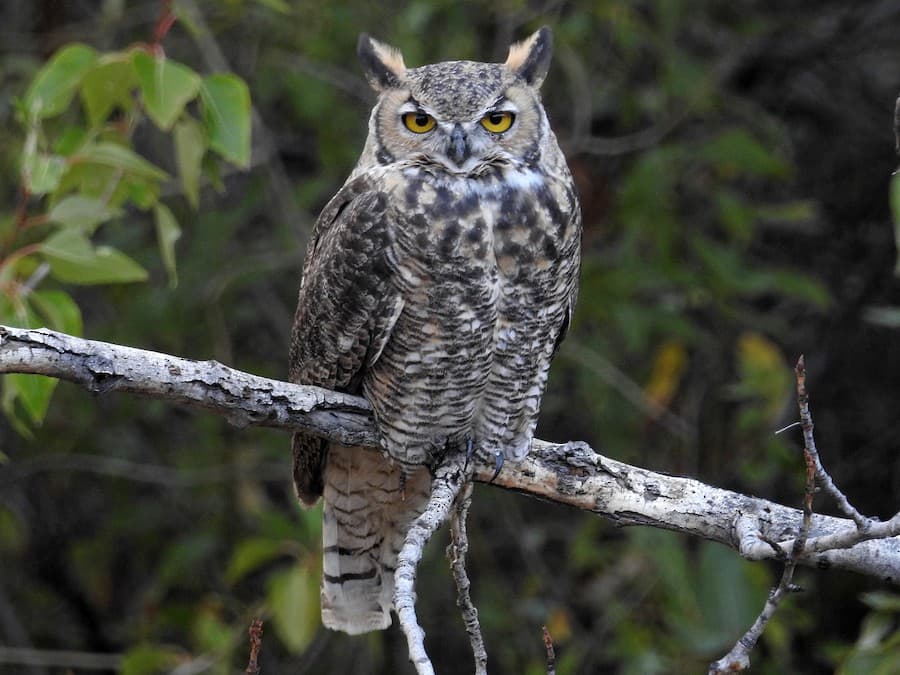
Large and widespread owl with dis" tin ctiv e ear tuf "ts. Found in a variety of habitats from dense woods to prairie and deserts with at least some trees. Also, found in wooded towns and suburbs. Typically well-camouflaged dark brown overall, but varies in color. Often engages in haunting duets, with males and females hooting back and forth. Preys upon a variety of animals, including mammals, birds and reptiles.
eBird species page
Great-tailed Grackle
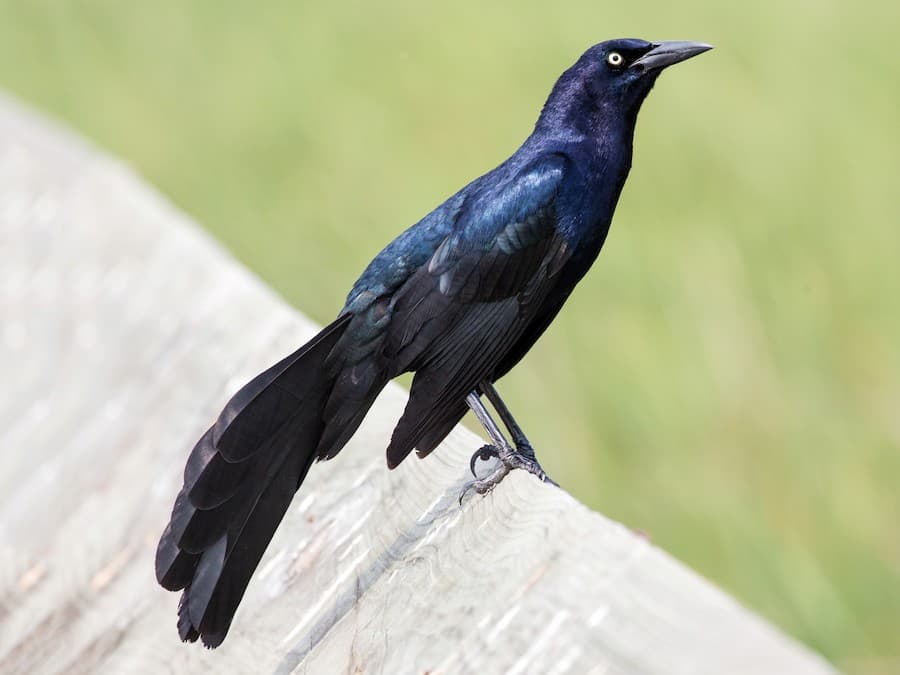
Large, lanky blackbird with flat" cro wn a nd long t "ail. Males have ridiculously long tails, almost as long as their body, often held in a V-shape. Males are glossy black. Females are brown with paler eyebrow and throat. Eyes yellow to white; dusky for immatures. In coastal Texas, where its range overlaps with Boat-tailed Grackle, note habitat (more generalized as opposed to strictly saltmarsh) and pale eye (not brown).
eBird species page
Greater Yellowlegs
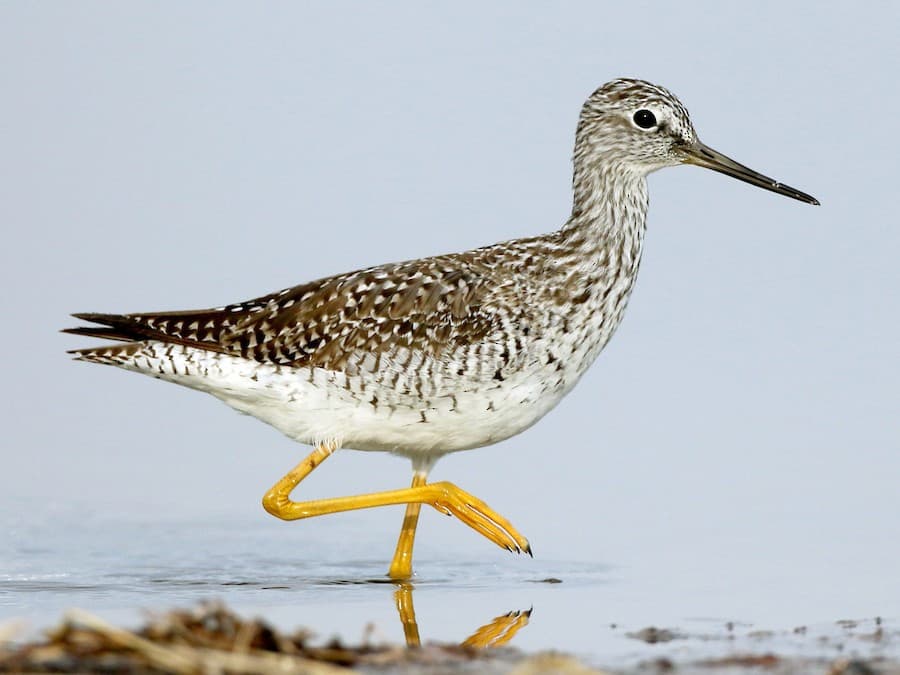
Fairly large shorebird with brigh" t y ello w legs. P "lumage is essentially identical to Lesser Yellowlegs: gray upperparts with white speckling, streaky neck, and white belly. Proportions are most important for identification. Greater is larger overall with longer, thicker, more upturned bill, longer neck, blockier head, and bigger chest. Forages actively on mudflats and in shallow pools and marshes, often in loose mixed flocks with Lesser Yellowlegs. Somewhat more likely to be found in larger, more open habitats than Lesser, but much overlap. Listen for strong, ringing “tew tew tew!” calls, louder than Lesser, and usually three or four notes instead of one or two (though Greater can also give single notes).
eBird species page
Great Egret
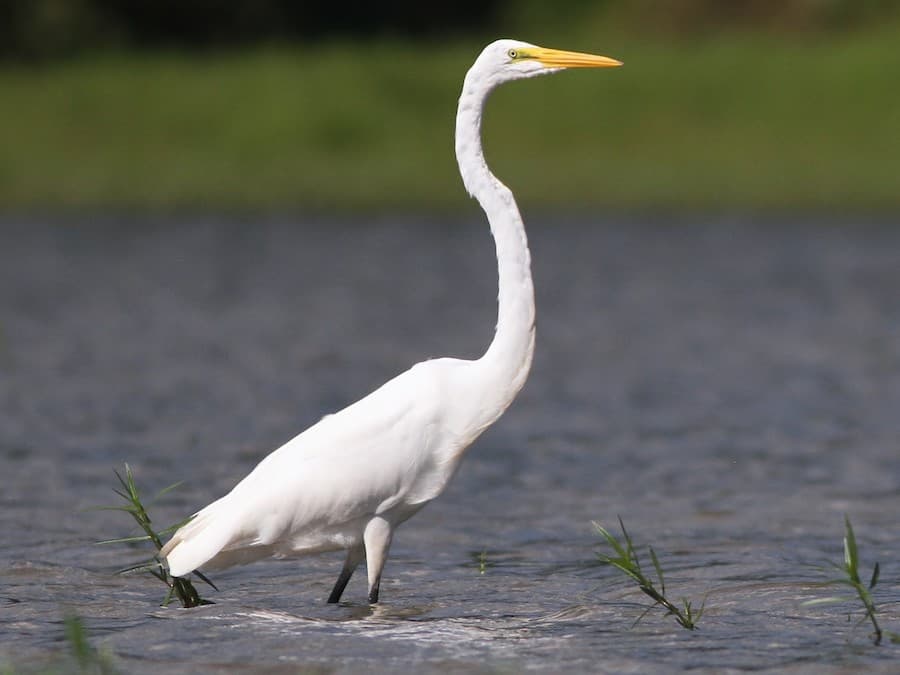
Large, lanky, long-necked white h" ero n. S ize and b "lack legs help separate from other egrets. Widespread and fairly common across the globe. Bill color varies across range: always yellow in the Americas, black in breeding season elsewhere. Occurs in any shallow wetland, including ponds, marshes, and tidal mudflats. Slowly stalks prey in shallow water. Often seen singly, but sometimes gathers in large numbers where food is plentiful. Breeds in colonies, frequently mixed with other egrets and herons.
eBird species page
Hairy Woodpecker
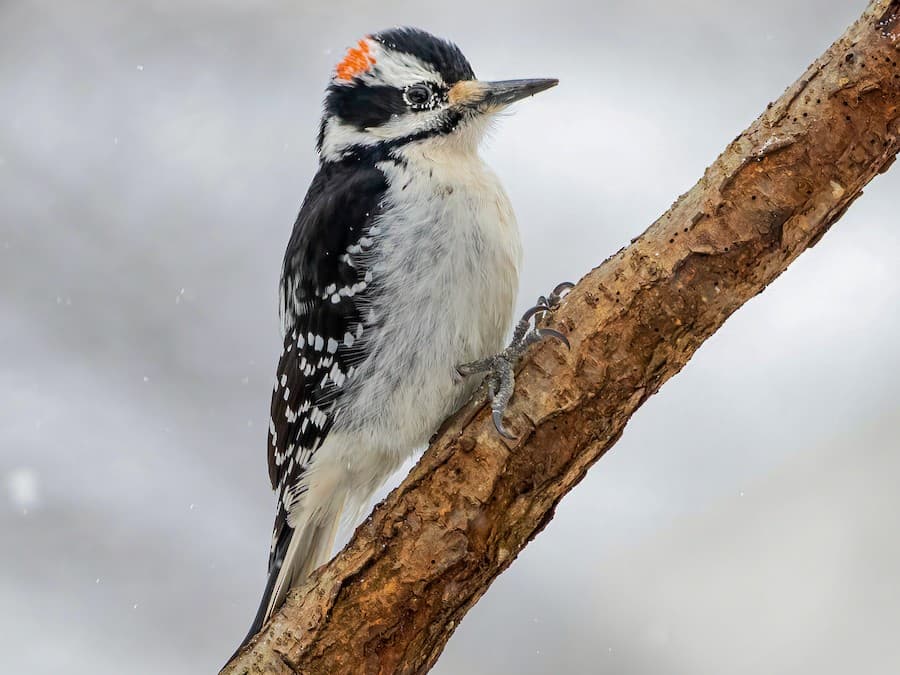
Medium-sized woodpecker, common a" nd wide spread ac "ross North America as far south as western Panama. Black-and-white plumage is nearly identical to the smaller Downy Woodpecker. Focus on the bill: Hairy has a longer bill, about the length of the head. Also look for clean white outer tail feathers. Some variation in color across range; birds in western North America and especially Central America are brownish, with limited white in the wing. Occurs in wooded habitats with large trees. Familiar visitor to backyard feeders, especially fond of suet. Calls include a loud “peek!” and a fast rattle, stronger than Downy Woodpecker.
eBird species page
Hermit Thrush
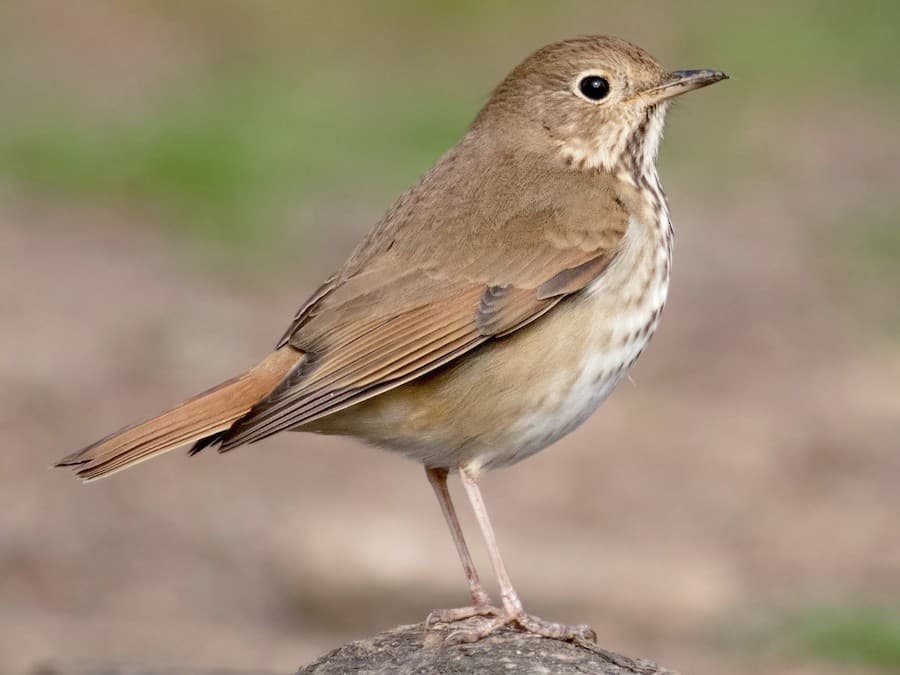
Medium brown above with contrasti" ng redd ish tail. "Dark spots on breast do not continue all the way down belly like Wood Thrush. Found in wooded areas; often hops on the ground or skulks in dense patches of shrubbery. Winters further north than other thrushes; many stay in the U.S. Listen for its beautiful song that is higher pitched than other thrushes with a steady introductory note; also gives low
eBird species page
Hooded Oriole
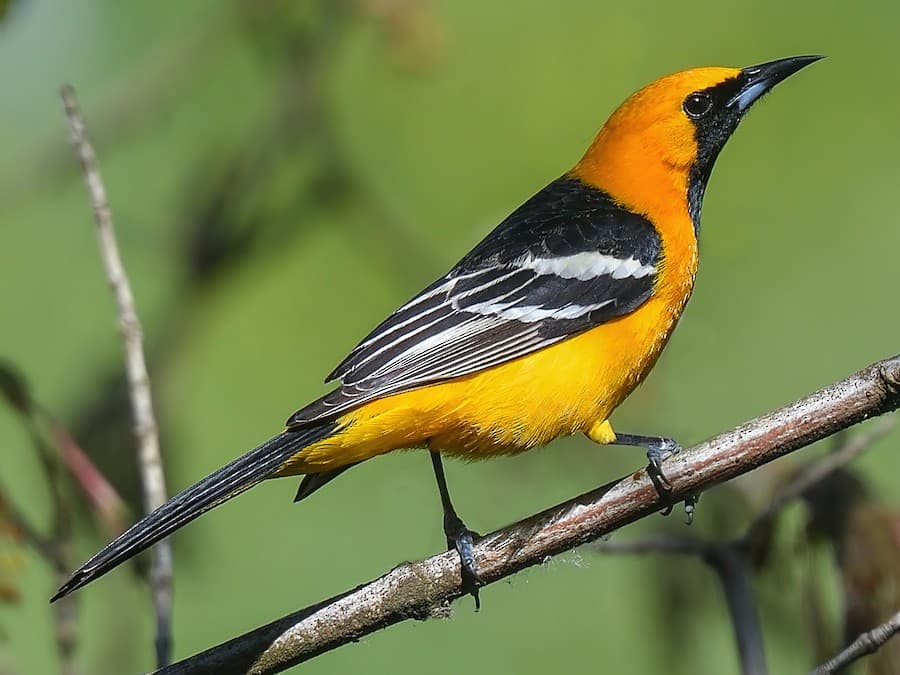
Rather slender, long-tailed oriol" e. Adul t males a "re orange with a black mask and throat and obvious white shoulder patch. Variable color intensity: Eastern birds (from Texas to the Yucatan Peninsula) are brighter orange; Western birds are more yellow. Females are dull yellow with a grayish wash on the upperparts and sides. Immature males are similar to females, but brighter yellow and with a black throat. Occurs in open woodlands and scrub in the southwestern U.S. and Mexico. Often seen in parks and neighborhoods, with an affinity for palm trees. Visits feeders with nectar and fruits. Most similar to female Orchard Oriole, but note the longer, more decurved bill.
eBird species page
House Finch
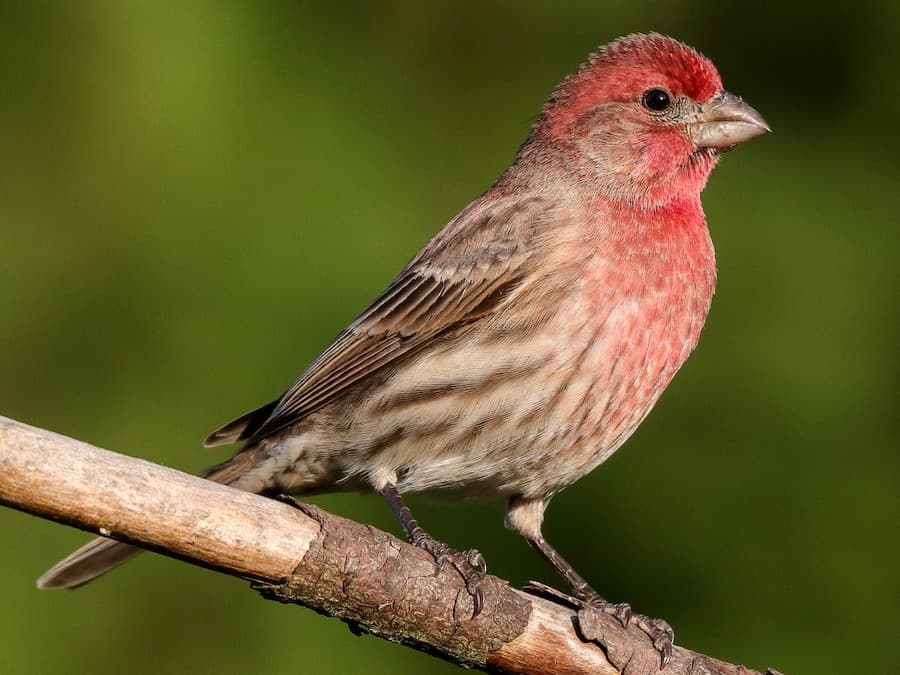
Frequents suburban settings acros" s N orth "America," "along with open woods, brushy field edges, and deserts. Males vary in shades and intensity of red. Some males are yellow or orange. Females are drab gray-brown overall with plain faces and blurry streaks on underparts. Similar to Purple and Cassin
eBird species page
Killdeer
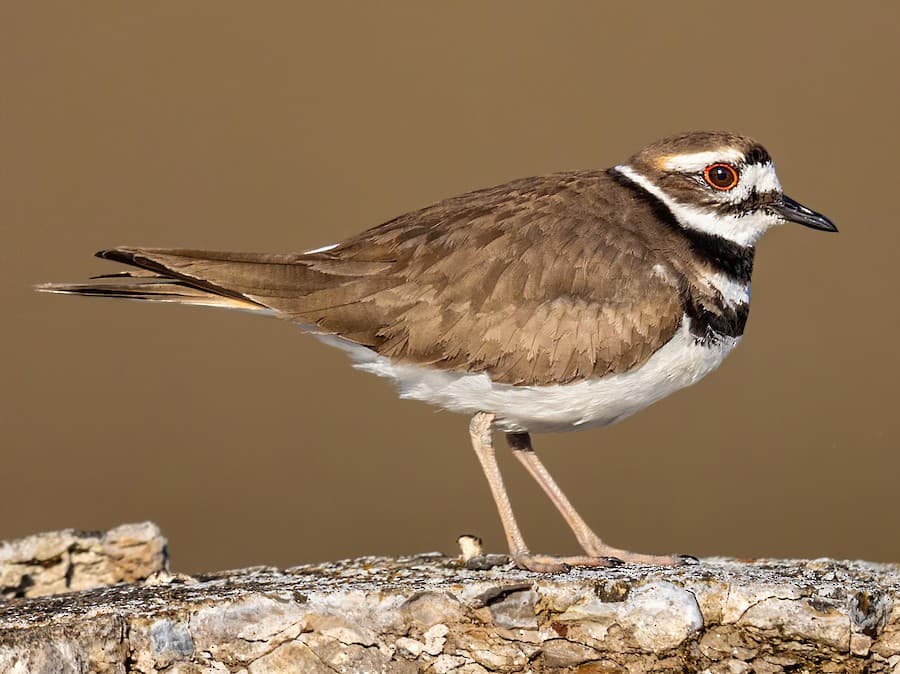
Common, large plover. Slender sha" pe with long win "gs and tail. Look for two black breast bands, unique among plovers in its range. Often nests near human development: parking lots, school roofs, road edges, and farms, usually on bare gravel. Adults perform broken-wing displays to distract predators from their nests and young. Gathers in larger numbers in migration and winter, often in fields with short grass or barren dirt. Occurs throughout North America; more local along the Pacific coast of northern South America. Can be very vocal; listen for loud namesake “kill-deer” call.
eBird species page
Lark Sparrow
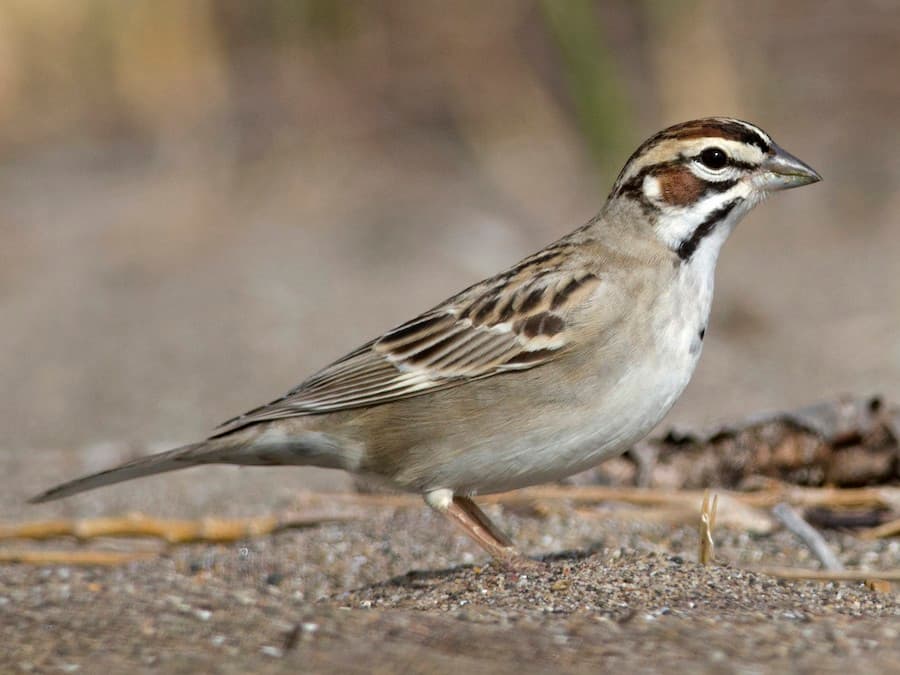
Large and boldly patterned sparro" w. Look for uniq "ue black, white, and rufous face pattern, brighter on adults and duller on immatures. Favors open areas with scattered trees when breeding; often forms flocks in brushy areas in winter. Usually feeds on the ground and flies up into trees when disturbed. In flight, notice long tail with broad white corners.
eBird species page
Lazuli Bunting
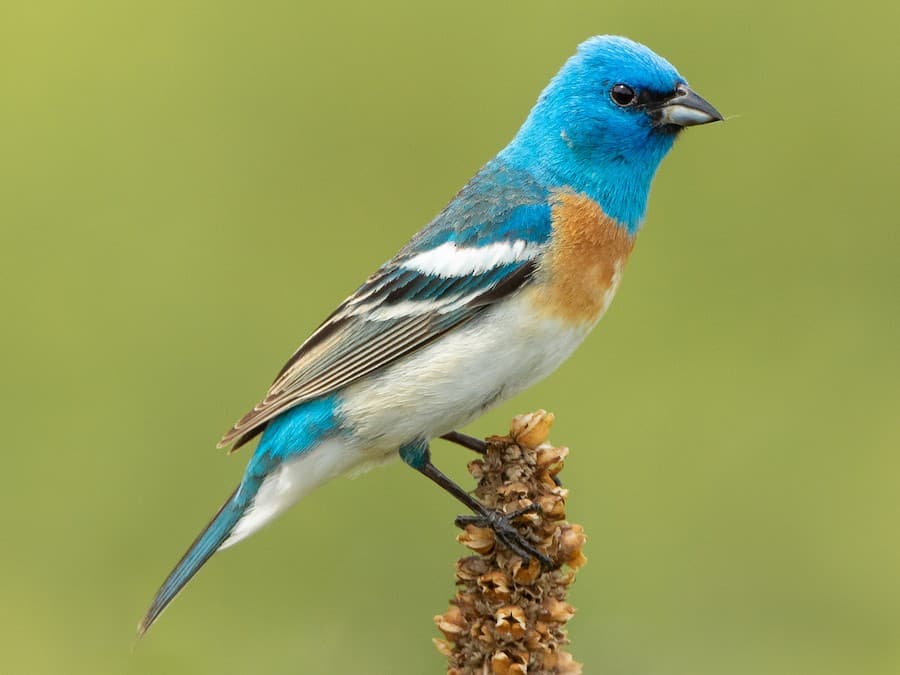
Breeding males are unmistakable:" bri ght cerulean "above with bold white wingbars, white belly, and orange breast. Females are plain buffy brown with paler wingbars and slightly brighter orangey breast. Breeds on shrubby hillsides and other semiopen habitats in western North America. Males often sing from a high exposed perch. Winters mainly in Mexico, where it frequently gathers in flocks in weedy fields. Females can be very difficult to distinguish from Indigo Bunting, although their range doesn
eBird species page
Lesser Goldfinch
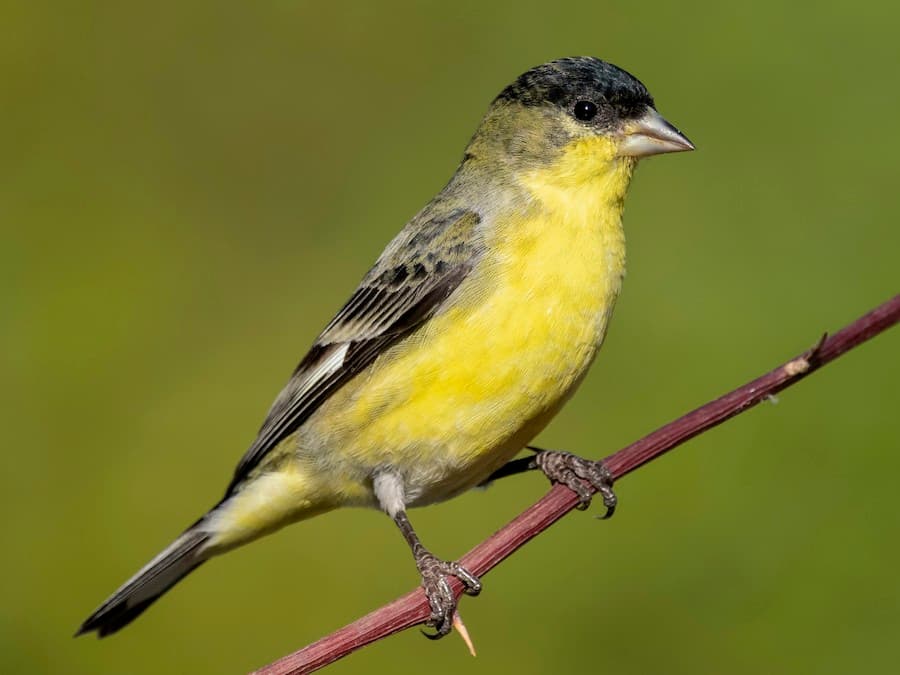
Tiny yellowish finch. Blackish co" nic al b ill is st "out, but sharply pointed. Long wings are black with one white wingbar and large white patch at the base of the primaries. Small head. Short notched tail. Adult males have either green or black (Texas to South America) back. Regularly visits feeders. Females similar to American Goldfinch; note bill shape and color, usually more yellowish undertail coverts, less distinct wingbars, and more obvious white patch at base of primaries.
eBird species page
Mourning Dove
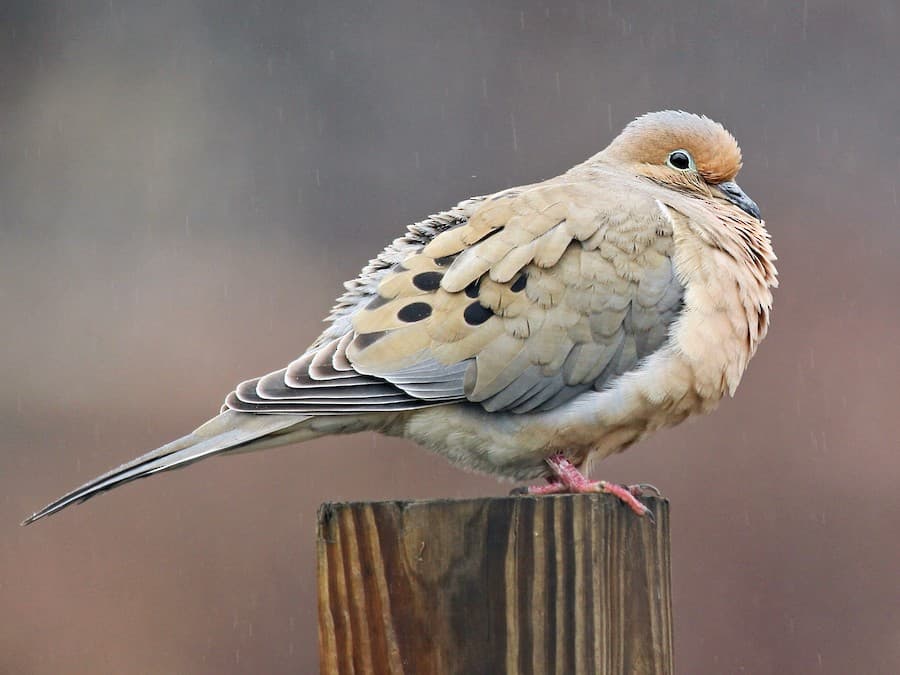
Svelte with a long, pointed tail." Pl ain brown ove "rall with dark spots on wing. Juvenile is covered with pale scaly pattern, but is much larger and longer-tailed than ground doves. Widespread and common throughout much of North America, from southern Canada to Panama, including the Caribbean. Found in a variety of habitats from agricultural fields to lightly wooded areas. Loves suburbs, where it often sits on telephone wires and visits bird feeders. Avoids dense forest, but found on forest edges. Usually seen in pairs or small flocks, sometimes gathering in larger numbers, especially in winter. Listen for distinctive cooing song and whistling wings as it takes off.
eBird species page
Northern Mockingbird
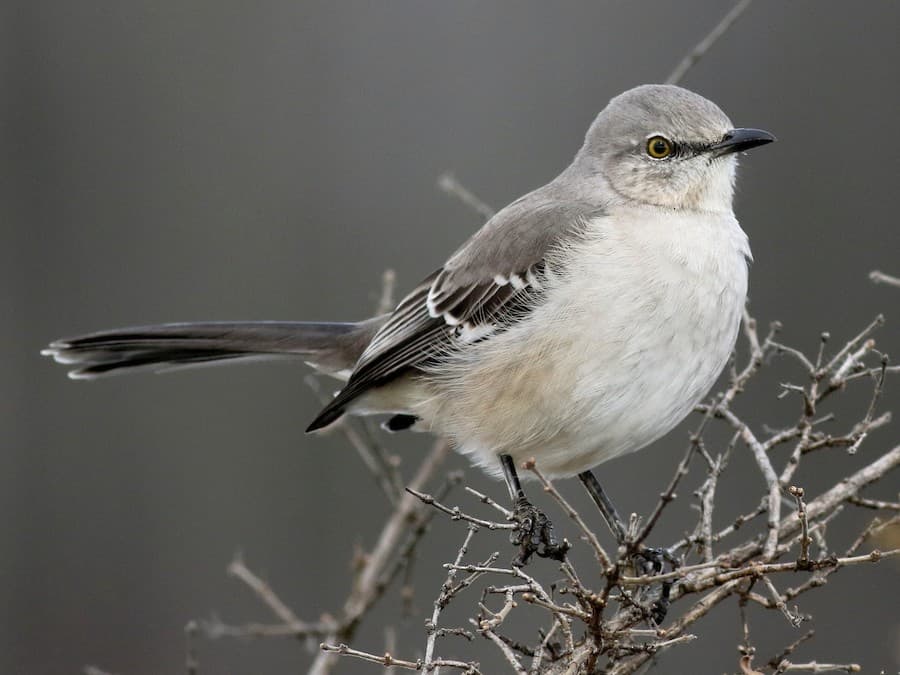
Common and fairly widespread acro" ss much of North "America and the Caribbean. Medium-sized songbird with a relatively long tail, small head, and short bill. Gray above and paler whitish below. Note white wingbars and large white patch at the base of the primaries. Found in a variety of open habitats with scattered bushes or trees, often close to human settlements. Well-known for its impressive mimicry; often includes a wide range of other birds, car alarms, slamming doors, and other mechanical noises in its song. Limited range overlap with Tropical Mockingbird at the Isthmus of Tehuantepec in Mexico; Northern is most easily identified by its large white wing patches.
eBird species page
Nuttall's Woodpecker
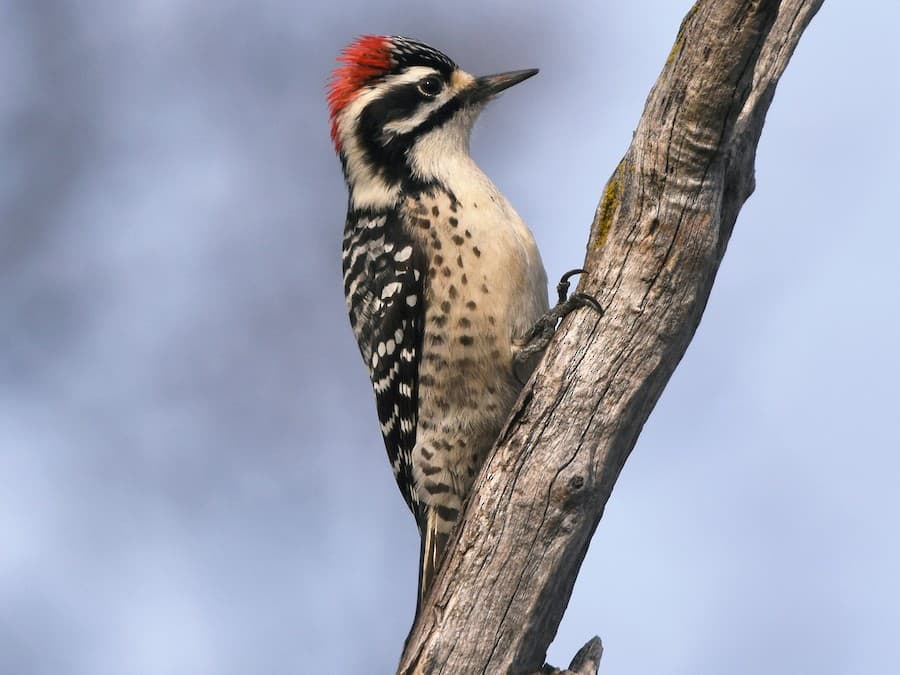
Small woodpecker almost entirely" res tric ted to th "e state of California (barely entering northern Baja). Look for black-and-white barring on the back and patterned flanks. Males have a red cap, often raised and fluffy-looking. Occurs in oak woodlands and riparian areas, sometimes visiting bird feeders. Most similar to Ladder-backed Woodpecker, but range barely overlaps. Also compare with Downy Woodpecker, which has clean flanks and lacks bars on the back.
eBird species page
Oak Titmouse
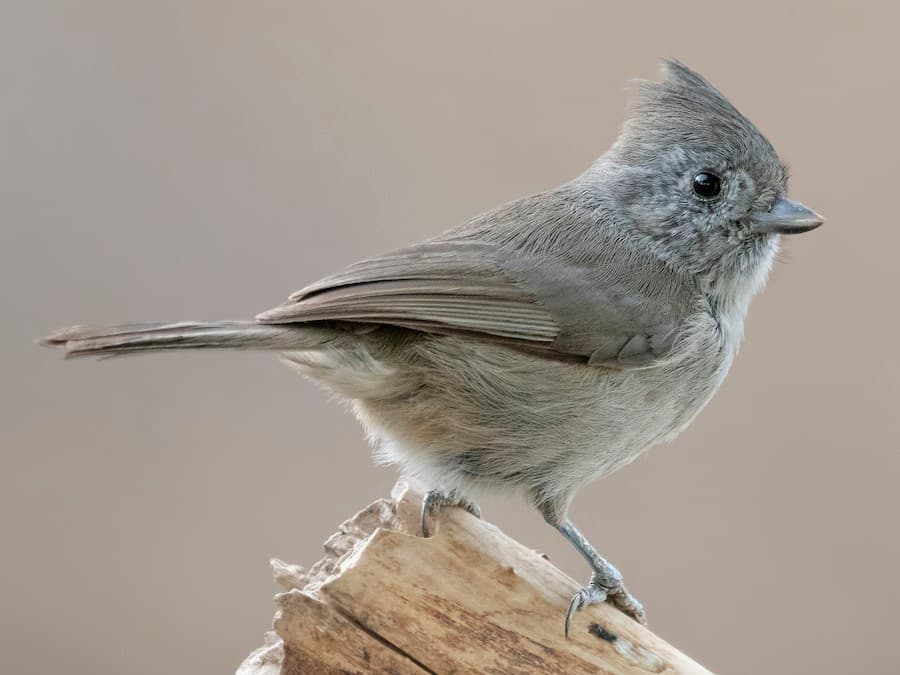
Completely nondescript: all gray-" bro wn w ithout an "y sort of color pattern. Still cute and personable, often in small family groups bustling through their namesake oak trees (though they occasionally stray into other species of trees). Visits feeders. Extremely similar to Juniper Titmouse, but separated by range.
eBird species page
Peregrine Falcon
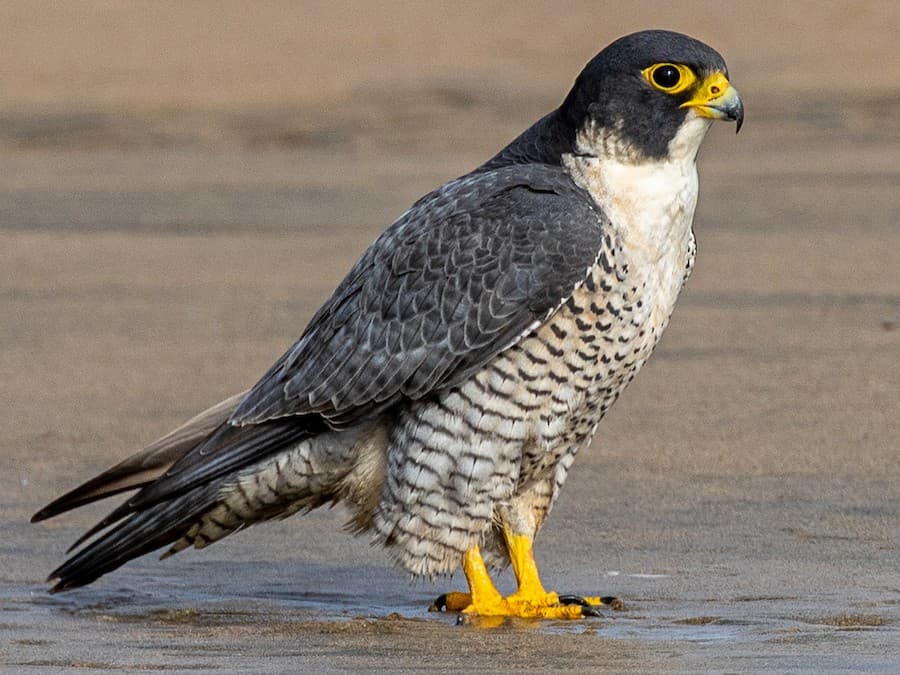
Sleek, fast-flying large falcon." Alw ays look for "a grayish back in adults, long wings that almost reach the tail tip, and powerful but slender build. Dark mark below each eye varies in shape and size. Juveniles are more heavily patterned below than adults, and can be quite brownish above. Patterning varies considerably across a wide global range, with back color ranging from pale gray in Central Asian “Red-capped” to slaty-blue across much of northern Eurasia North America, to almost black in Asian “Shaheen.” Chases prey down at high speeds with continuous powerful wingbeats. Becoming increasingly common in parts of range, especially in cities, where they can nest on tall buildings and feed on pigeons. Adaptable, and can be seen in a wide range of habitats; often encountered in areas with steep cliffs, as well as around coastal mudflats and open areas with shorebirds.
eBird species page
Phainopepia
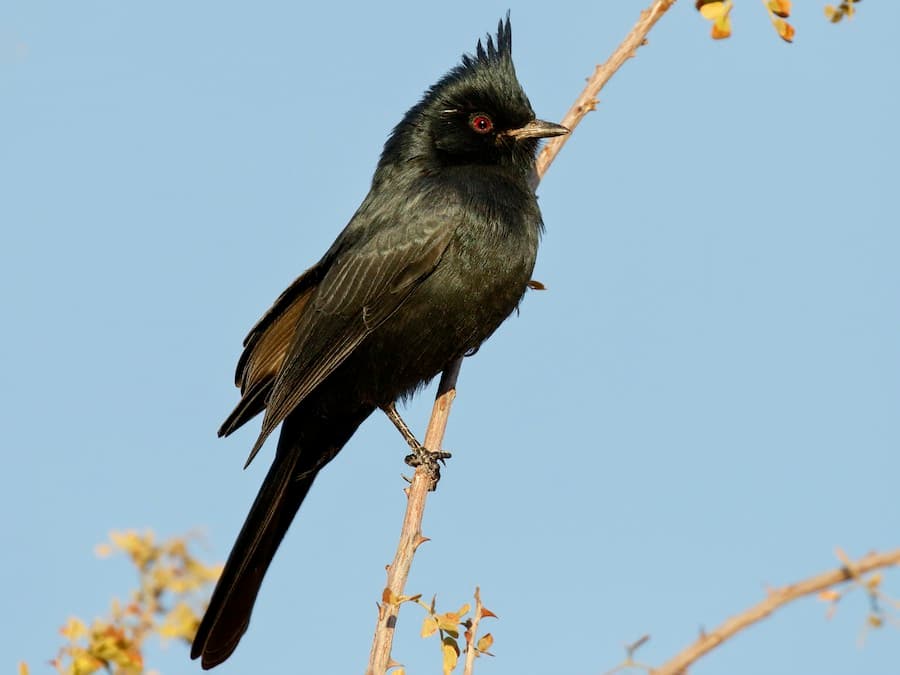
Unique bird of scrubby oak and me" squ ite habitats "with a sleek body, shaggy crest, long tail, and staring red eyes. Males are shiny black with a bluish sheen; white wing patches visible in flight. Females and juveniles are ashy-gray. Often in small groups; forages mainly on berries (especially mistletoe).
eBird species page
Pine Siskin
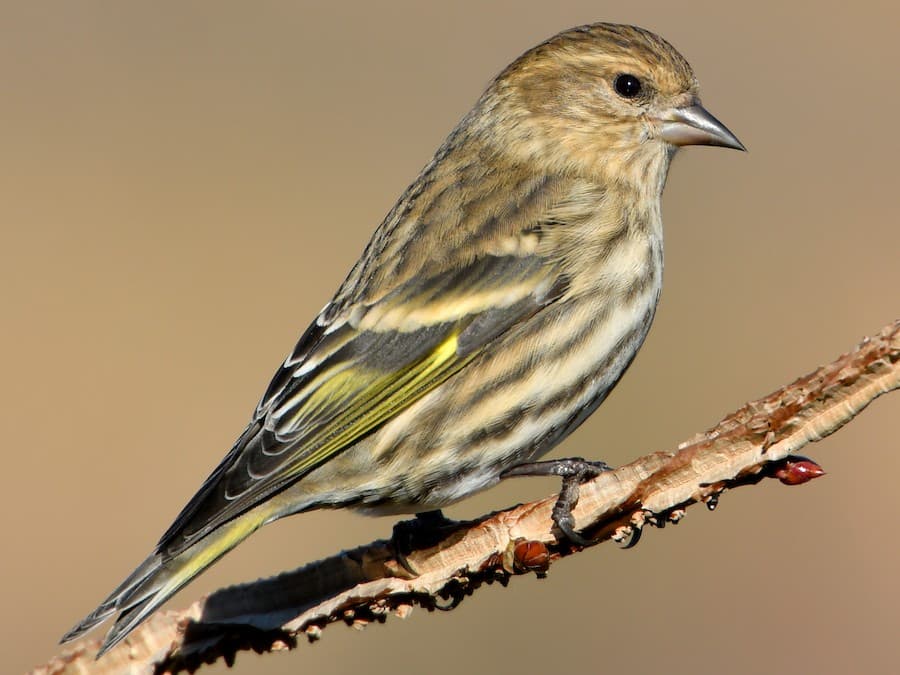
Small, brown, streaked finch. Som" e s how yellow in "the wing and tail. Sharply pointed bill. Short, notched tail and long wings. Often visits feeders in areas with conifers. Irruptive in many areas; can move south in only small numbers some years, large numbers in other years. Often joins flocks of goldfinches. Can be quite vocal; listen for distinctive rising buzz like a zipper being zipped.
eBird species page
Prairie Warbler
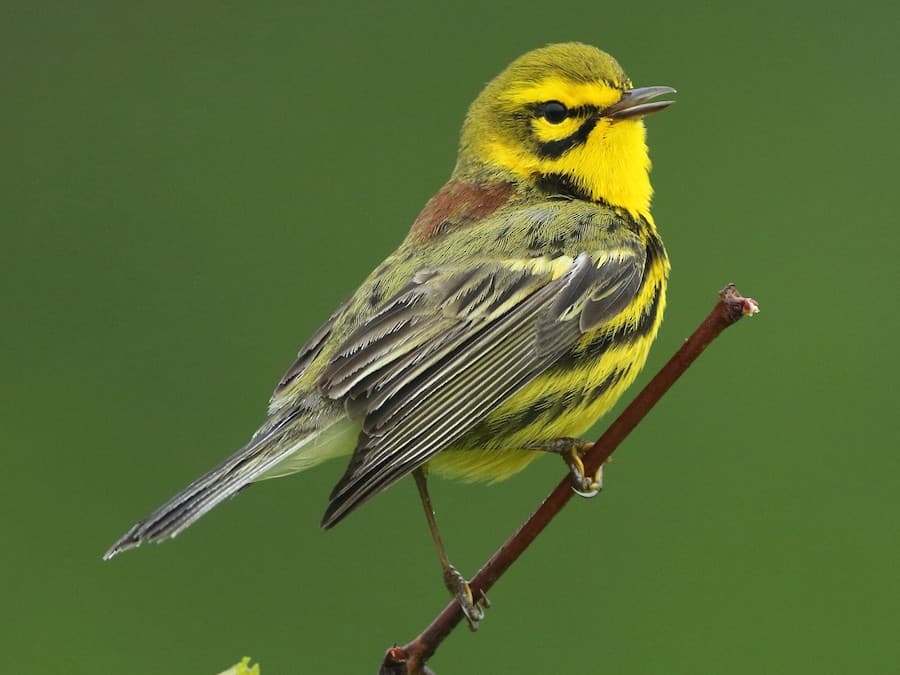
Small warbler, yellow overall wit" h b lack streaks "on sides and unique face pattern. Upperparts are duller olive. Reddish streaks on back are distinctive, but can be difficult to see or absent on immatures. Long tail is often pumped up and down, but not as consistently as Palm Warbler. Forages for insects in a range of shrubby habitats, from cedar-studded fields to regenerating woods to mangroves in Florida. Winters in Florida and the Caribbean.
eBird species page
Purple Finch
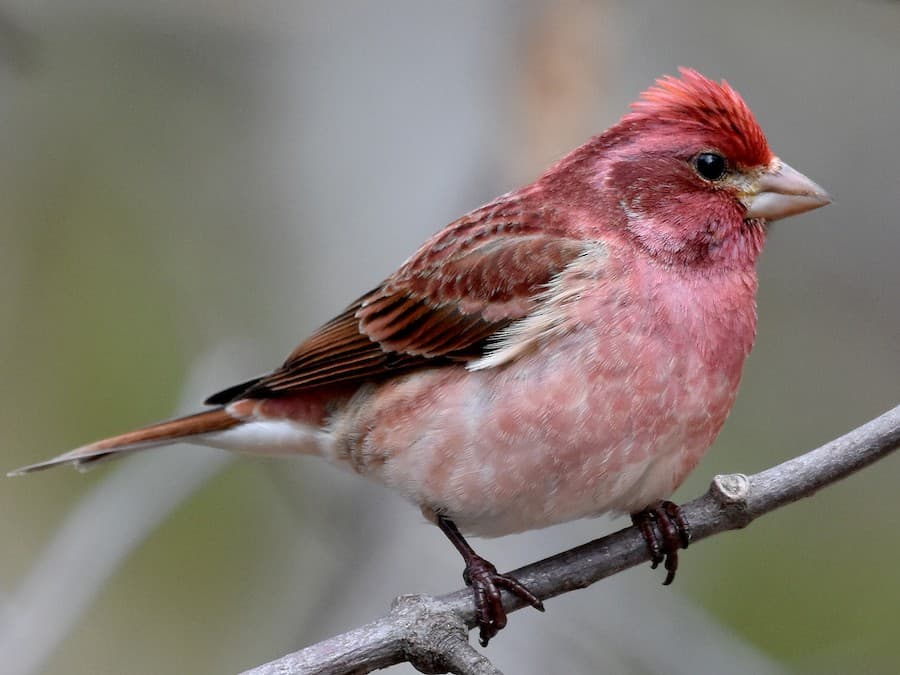
Males suffused with raspberry red" ", e" spec ially on "head and breast. Compared to House Finch, males lack distinct streaks on sides and are overall more colorful, especially on back and wings. Females and first-year males have contrasty head pattern with pale eyebrow and darker cheek; also note well-defined streaks on sides. Breed in coniferous or mixed forests. Winters in a wider variety of habitats with trees. Visits feeders.
eBird species page
Red-tailed Hawk
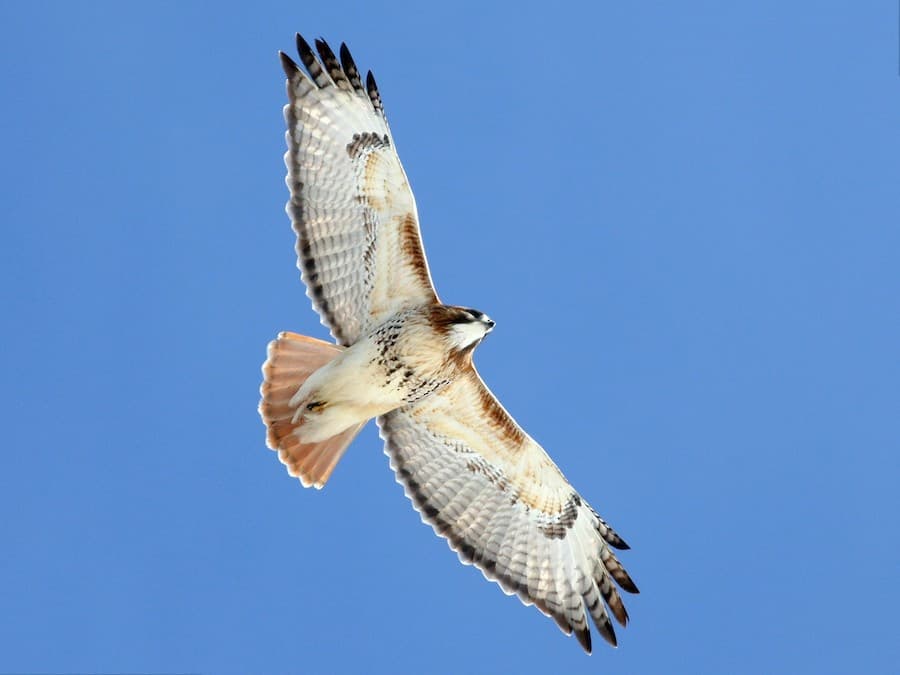
Most common roadside raptor acros" s m uch of North "America. Often perches atop telephone poles, light posts, and edges of trees. Incredible variation in plumages, including less common dark morphs and various regional differences. Eastern adults have brilliant reddish-orange tail and pale underparts with obvious band of dark marks across belly. Western birds are typically darker. Immatures do not have a red tail.
eBird species page
Red-winged Blackbird
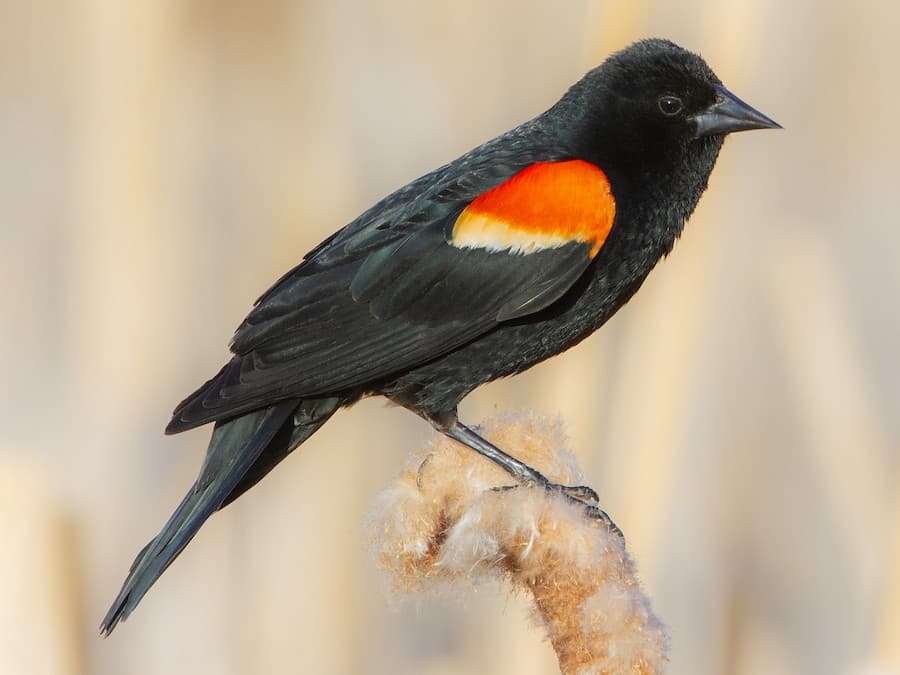
Males are black with red shoulder" pa tch that is s "ometimes concealed. Males have rusty feather edges in the winter. Females are streaked brown and often confused with sparrows. Look for long, sharply pointed bill. Often in flocks, especially in winter. Visits feeders. Breeds in marshes and scrubby, wet fields. Distinctive song, especially as migrants arrive in early spring.
eBird species page
Rock Pigeon
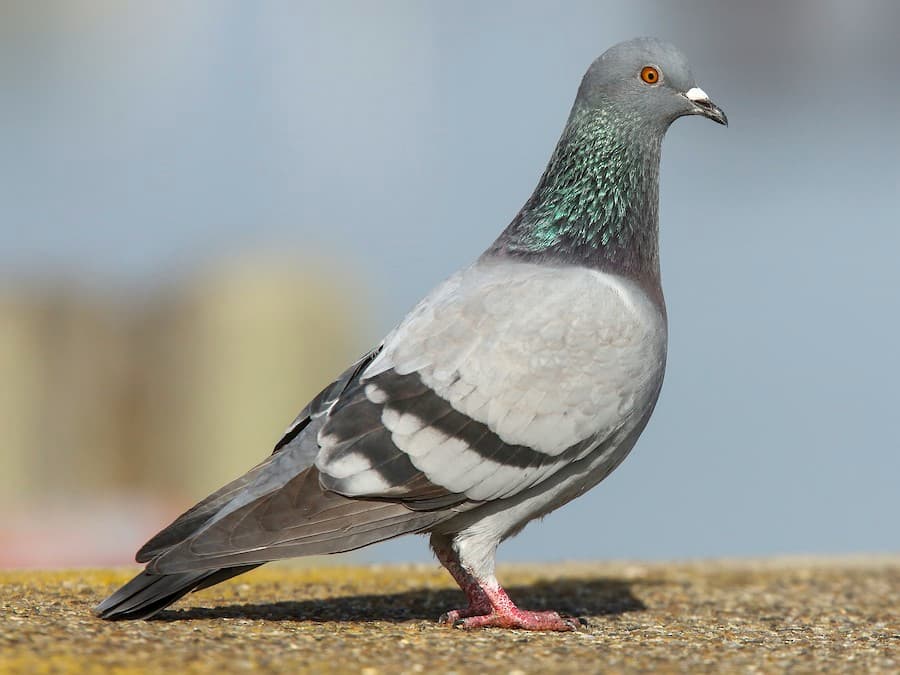
Fairly large pigeon with wild and" fe ral populatio "ns throughout the world. True wild birds nest on cliffs and in caves from western Europe to central Asia. Pale gray overall with two bold black wingbars and iridescent purple and green on neck. Feral varieties are common in cities and farmland, often in large flocks. Variable plumage: some identical to wild-type birds, but can be completely black, white, or orangey-brown and any combination in between.
eBird species page
Ruddy Duck
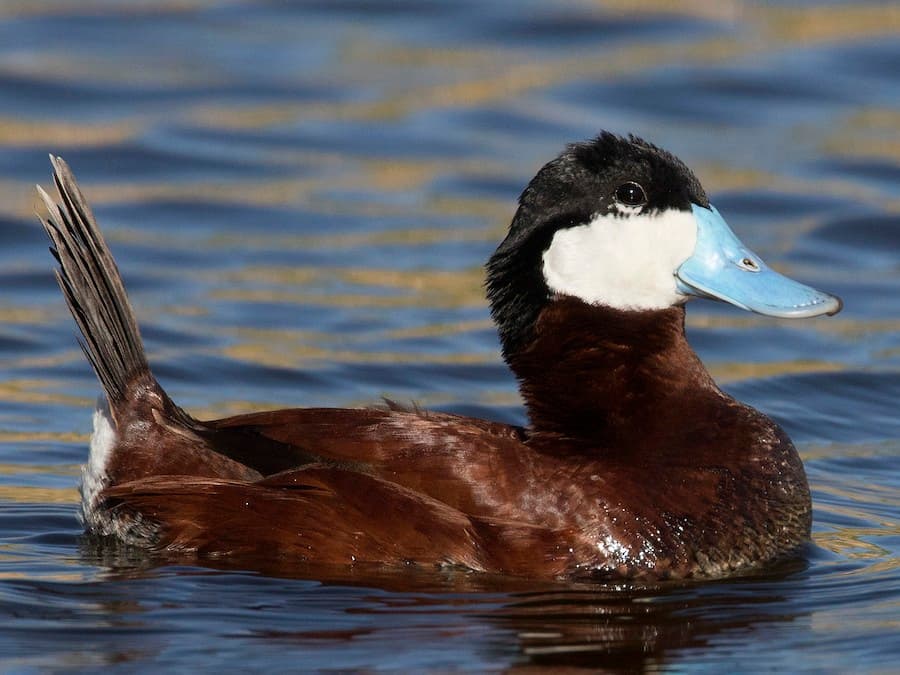
Small, compact duck with a long," fan #NAME? "ped tail," "often held sticking up out of water. Breeding males have a chestnut body, black cap, white cheek, and baby-blue bill. Winter males have a brown body, black cap and white cheek. Females and immature males are brown overall with a dark cap and dark line through the cheek. Often in tight groups bobbing like corks on ponds and bays. Dives to forage on aquatic invertebrates. Not often seen flying.
eBird species page
Say's Phoebe
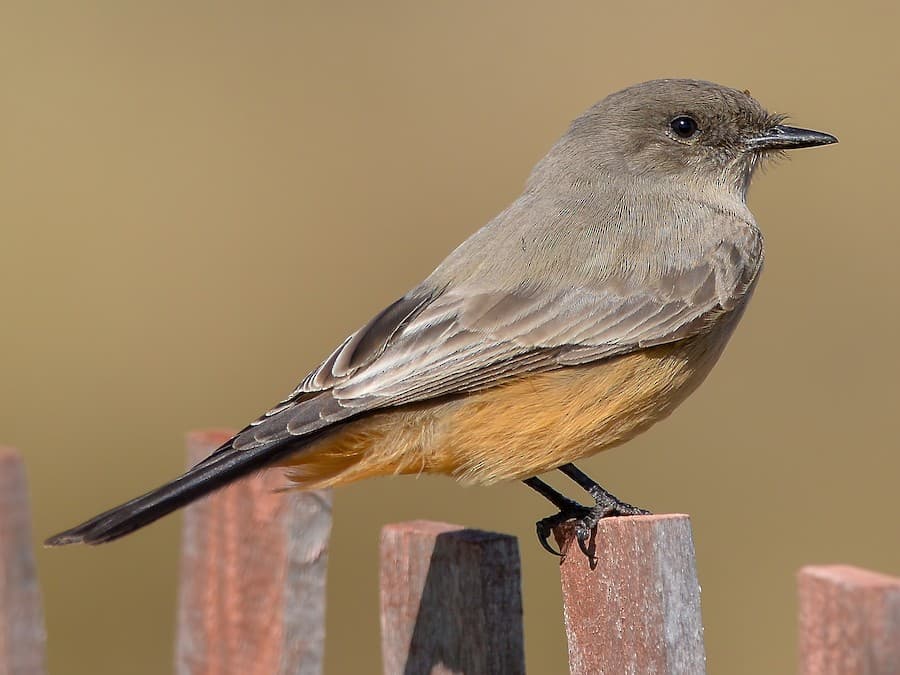
Medium-sized flycatcher with dist" inc tive salmon-o "range wash on the belly. Otherwise grayish-brown with a contrasting black tail. Also watch for frequent tail-wagging. Widespread and fairly common in western North America. Breeds as far north as Alaska, and winters to southern Mexico. Always in open habitats, usually on a conspicuous low perch.
eBird species page
Song Sparrow
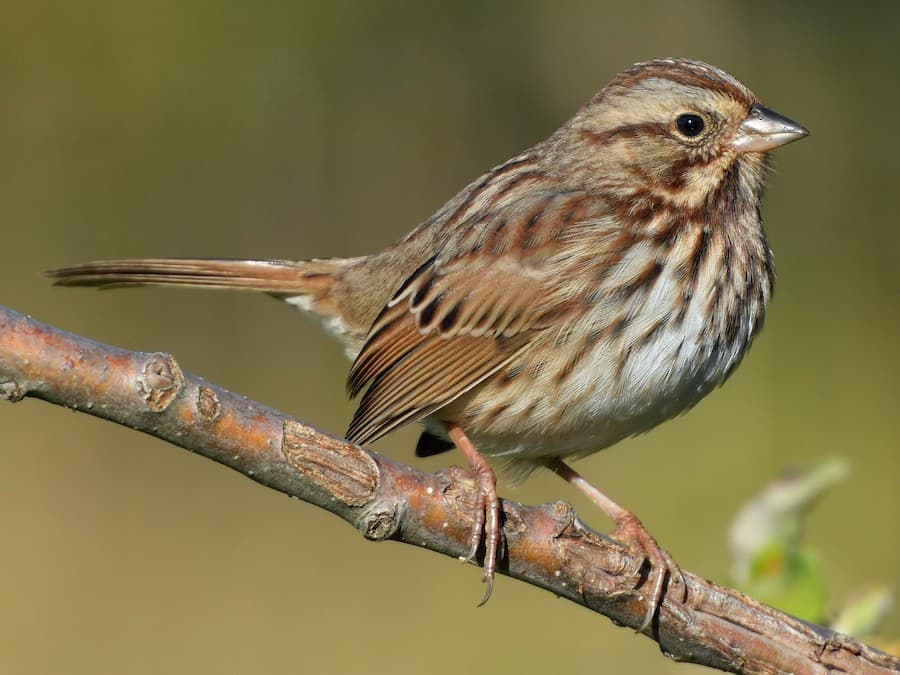
One of the most common and widesp" rea d sp arrows in "North America. Fairly large with a long, rounded tail. Overall coarsely patterned with gray and brown, usually with more reddish-brown wings and tail. Look especially for thick brown streaks on the underparts and a broad dark mustache stripe. Significant variation in plumage geographically: relatively pale and rusty in the southwestern U.S.; blacker streaking in California; overall dusky in the Pacific Northwest. Larger, longer-tailed and usually more rusty than Savannah Sparrow. Found in a variety of scrubby habitats both near and far from human development, especially edges of fields, often near water. Listen for husky
eBird species page
Spotted Towhee
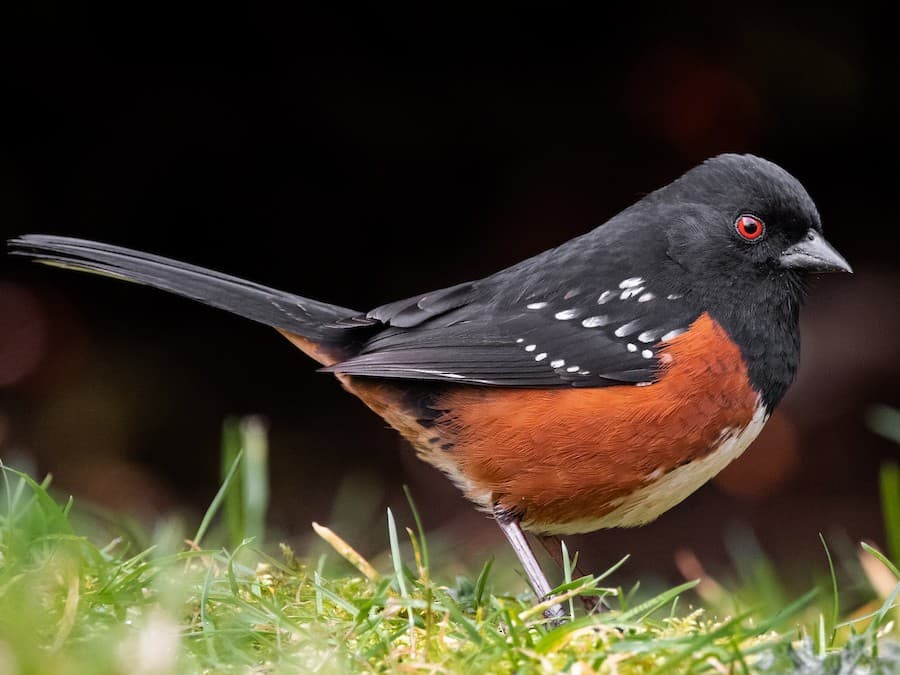
Large, striking, long-tailed spar" row of western N "orth America, from Canada to Guatemala. Black above with white spots on wings and back, bright rufous sides, and white belly. Eye is staring red. In flight, note white corners on tail. Also note females are grayer than males. Most similar to Eastern Towhee. Spotted shows more extensive white wing markings than Eastern, but note Spotted never shows the single bold white patch seen on the folded wing of Eastern. Hybridizes with Eastern Towhee in central North America; hybrids usually show intermediate wing pattern. Some populations in Mexico have olive tones on the upperparts and also hybridize with Collared Towhee. Inhabits scrubby areas and forest edges with thickets. Forages primarily by hopping along ground, scraping away leaf litter. Males sing from atop shrubs and low trees. Visits feeders.
eBird species page
Swainson's Thrush
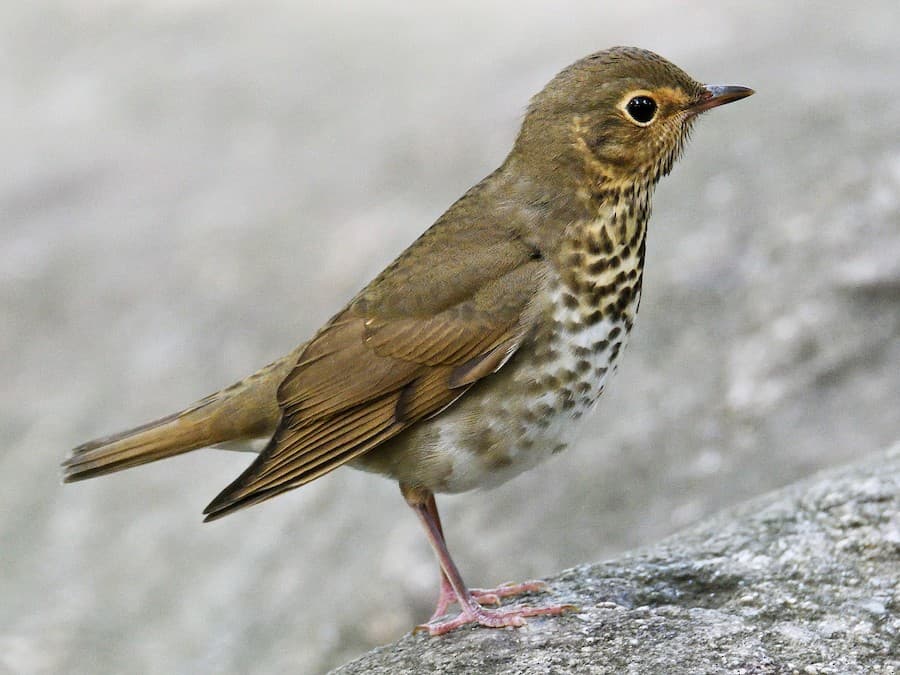
Uniform medium-brown above from h" ead to tail. Dis "tinctive pale, buffy eyering and face separates Swainson
eBird species page
Tree Swallow
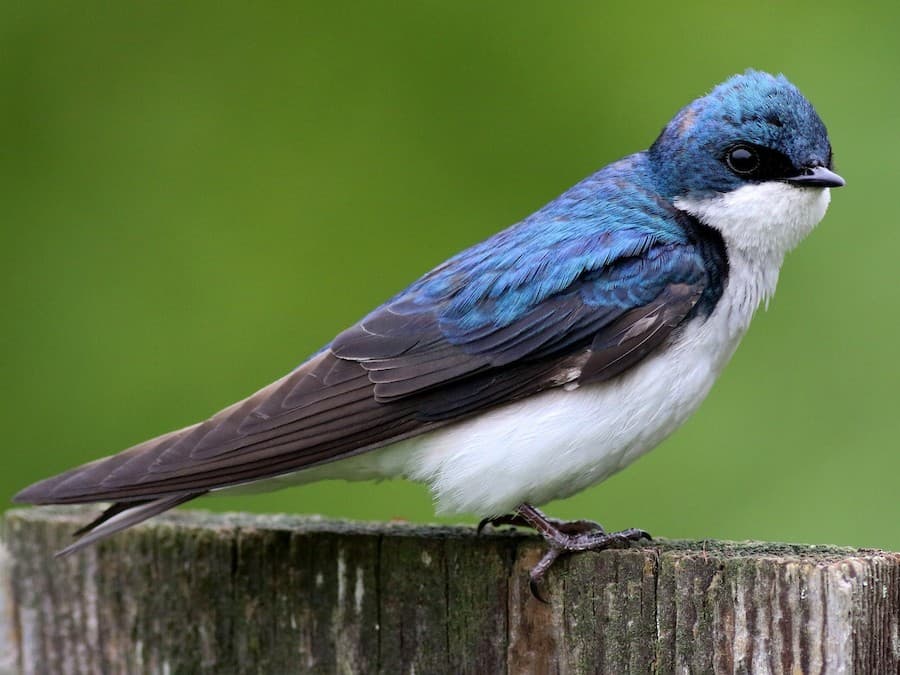
Common and widespread throughout" mos t of North Am "erica, breeding as far north as Alaska and wintering to Panama. A medium-sized swallow, with gleaming white underparts. Adult males are bright iridescent blue-green above; females and immatures are duller brownish with limited or no iridescence. Always note compact shape, fairly broad wings, and slightly notched tail. Occurs in a variety of open habitats including grassy fields, lakes, and marshes. Often in flocks, sometimes mixed with other species of swallows. Breeds in cavities, including human-made nest boxes. Listen for cheery gurgling calls. Compare especially with Violet-green Swallow; note Tree Swallow does not show extensive white wrapping around the cheek or the sides of the rump.
eBird species page
Turkey Vulture
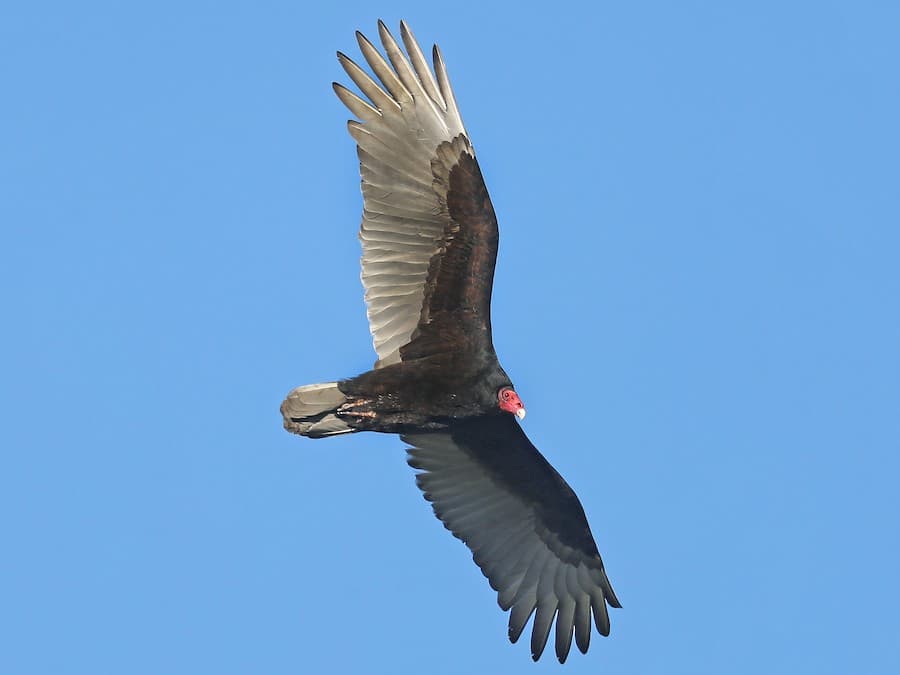
Large raptor. Appears dark from a" di stan ce. Up cl "ose, dark brown above with bare red head. In flight, undersides of wings are two-toned; lighter on the entire trailing edge of the wing, opposed to just wingtips on Black Vulture. Wings are held slightly raised when soaring, making a
eBird species page
Verdin
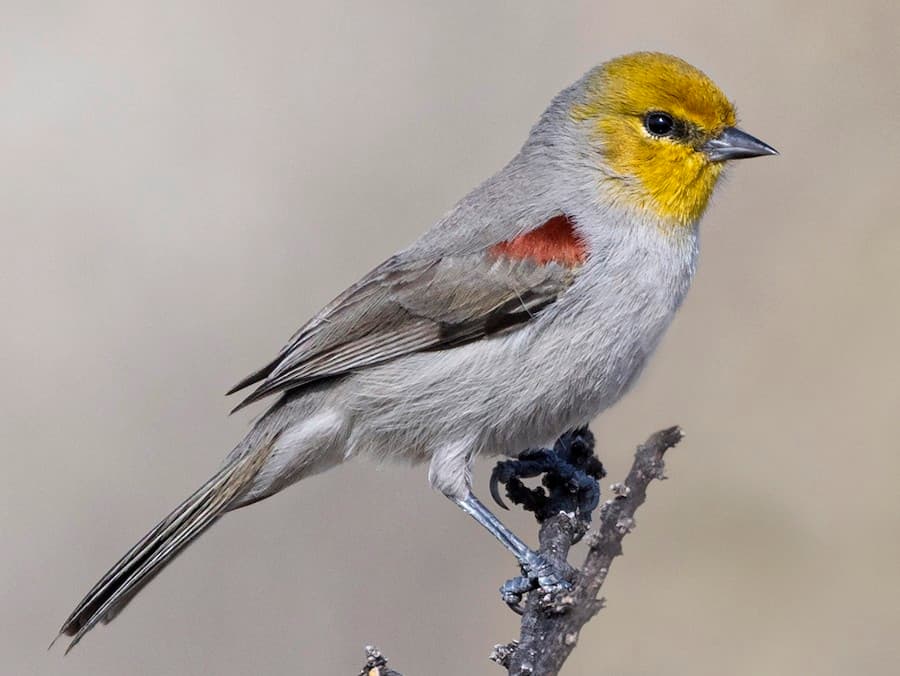
Tiny, unique songbird with a shar" ply poi nted bill ". Mostly plain gray with a yellow head. Small rufous patch on shoulders is sometimes visible. Juveniles lack the yellow head; note bill shape to help separate from Lucy
eBird species page
Violet-green Swallow
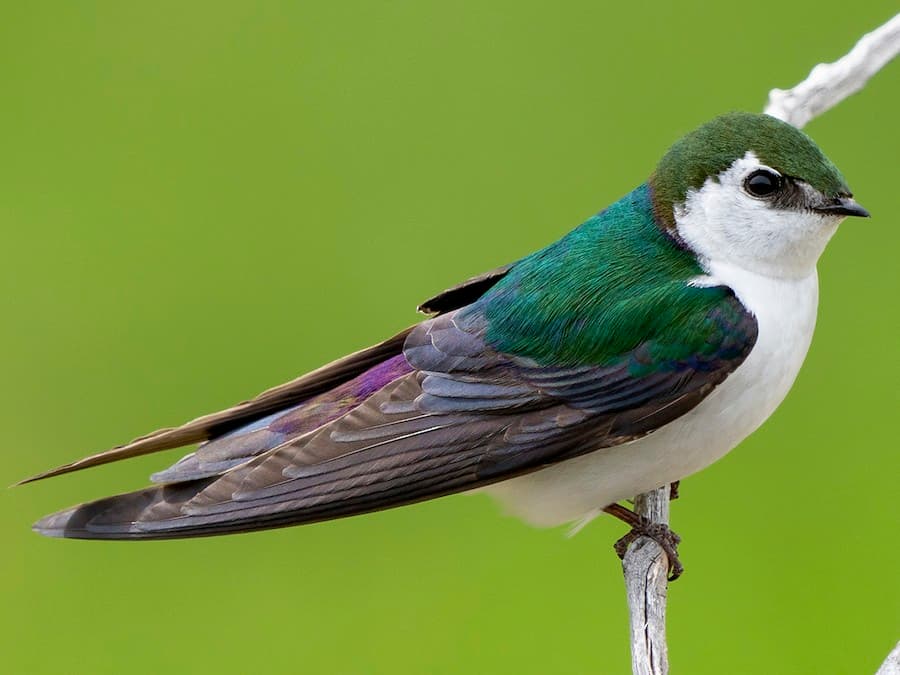
A relatively small swallow of wes" ter n No rth Ameri "ca. Adult males have a white face and show turquoise-green upperparts and a purple rump in good light. Females and immatures are duller on the upperparts, sometimes just dusky-gray. In flight, note the prominent white
eBird species page
Western Flycatcher
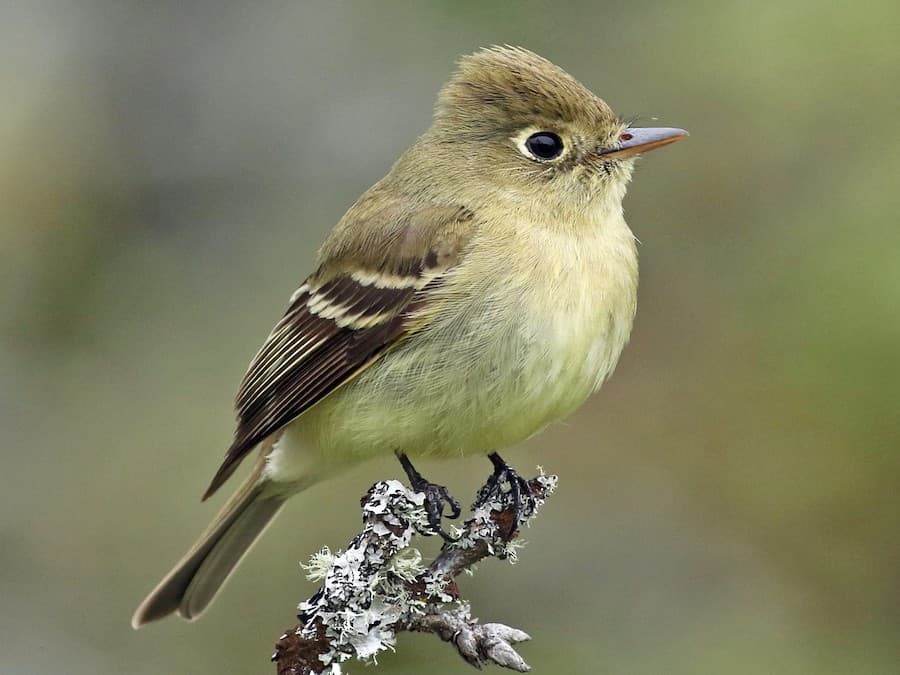
Small, yellow-olive flycatcher. B" rig hter yellow t "han most other Empidonax flycatchers. Look for bold teardrop-shaped eyering that comes to a point behind the eye, and fluffy, peaked crown. Breeds in coniferous and mixed woodlands, often near water; migrants and wintering birds can be found in a variety of wooded or scrubby habitats. Extensive range across western North America, breeding from southeast Alaska to Oaxaca. Winters mainly in west and central Mexico. Listen for squeaky, high-pitched song and calls. In winter, most often detected by unobtrusive high-pitched “tink” call. Formerly split into two species, Cordilleran and Pacific-slope Flycatcher.
eBird species page
White-breasted Nuthatch
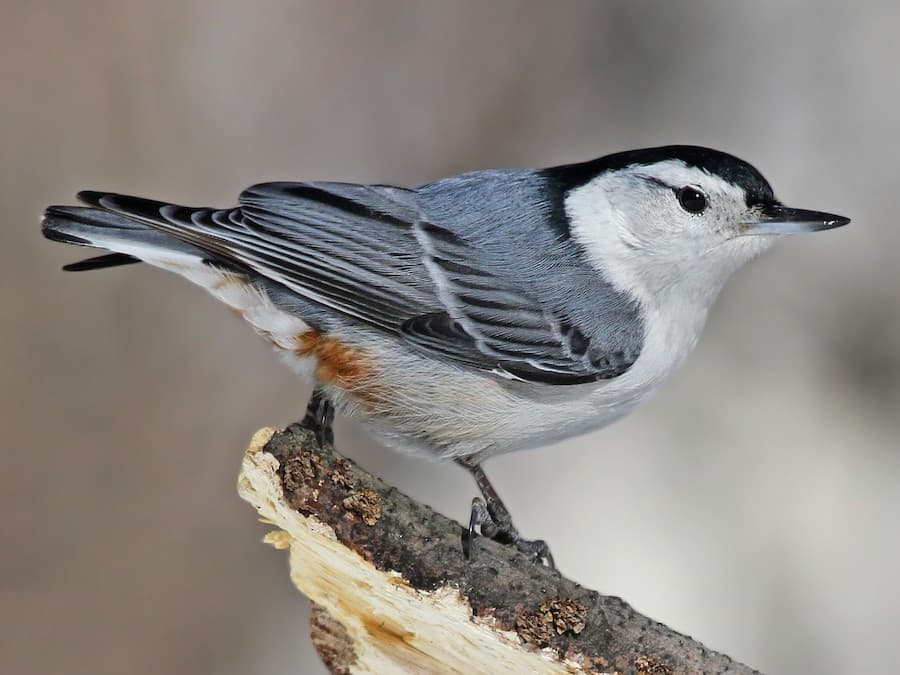
The largest nuthatch in North Ame" ric "a, w" ith disti "nctive white face, black cap, and blue-gray upperparts. Also note rusty lower belly and undertail coverts. Females have a slightly paler crown than males. Fairly common and widespread, usually in mature woodlands with large trees. Creeps along tree trunks and branches, often upside-down. Sometimes joins mixed flocks with other songbirds. Visits feeders. Listen for insistent yammering calls. Some subtle variation across range, mainly in the darkness of the sides and back, width of the black crown, and vocalizations.
eBird species page
White-crowned Sparrow
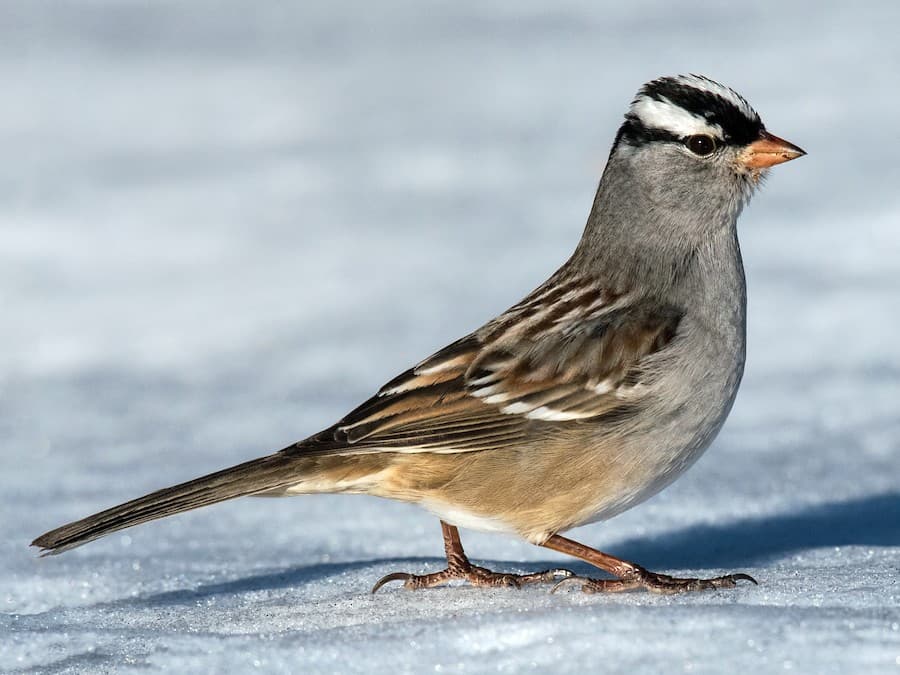
Large, long-tailed sparrow with s" tri king head pat "tern. Adults have black and white stripes on the head, while immatures show brown and tan. Underparts are plain grayish without streaks. Bill color varies from yellow to pink, but always brighter than White-throated Sparrow. Breeds in brushy areas or thickets in open forest, often with conifers. In migration and winter, can be found in any brushy or weedy areas, often hopping on the ground. Visits feeders.
eBird species page
White-tailed Kite
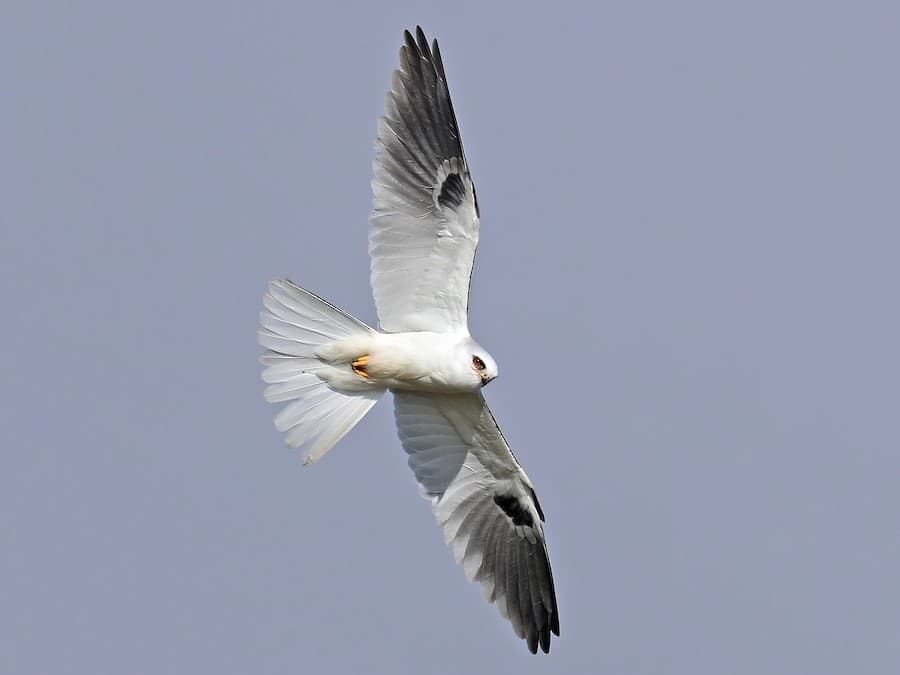
Mostly white, small hawk. Gray wi" ngs and back wit "h black shoulders. Hovers over open areas in search of mice, snakes, and other prey. Perches atop tall vegetation in open landscapes including coastal plains and agricultural areas.
eBird species page
Wild Turkey
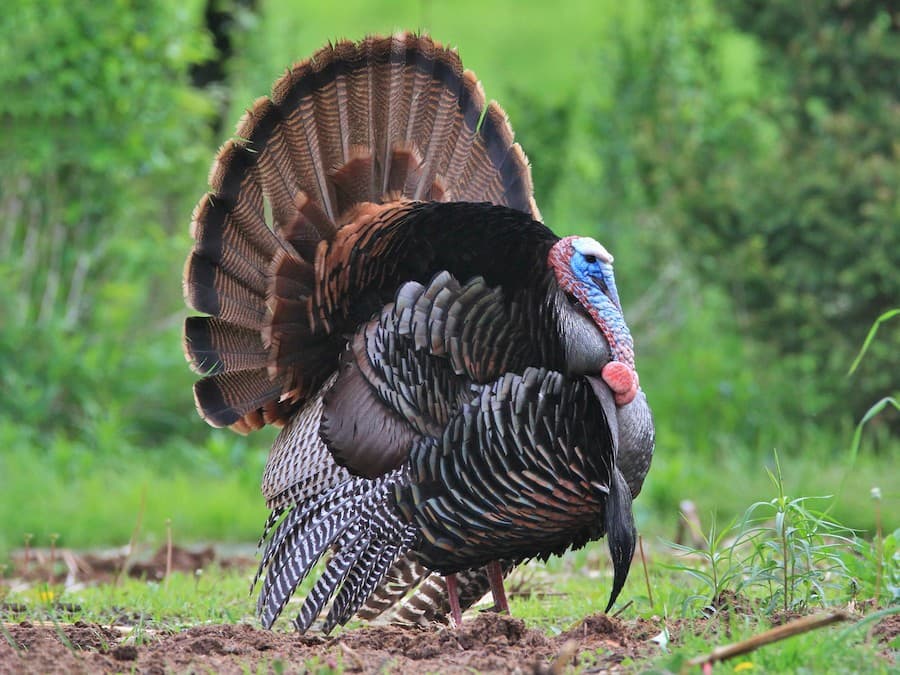
Among the largest birds in North" Ame rica . The lar "ge-bodied, long-legged and small-headed look of a turkey is distinctive. Appears dark from a distance. Often seen in small groups in open fields near woods. Gobbling often audible in the spring and early summer.
eBird species page